We’ve received several recent comments from people defending bloodsport dogs who admit they don’t see any issues with various adoption ads.
This is common. It’s not that the creators of these ads are naive. It’s that they’re targeting naive demographics. It’s a serious #consumerprotection problem within the #rescueindustry.
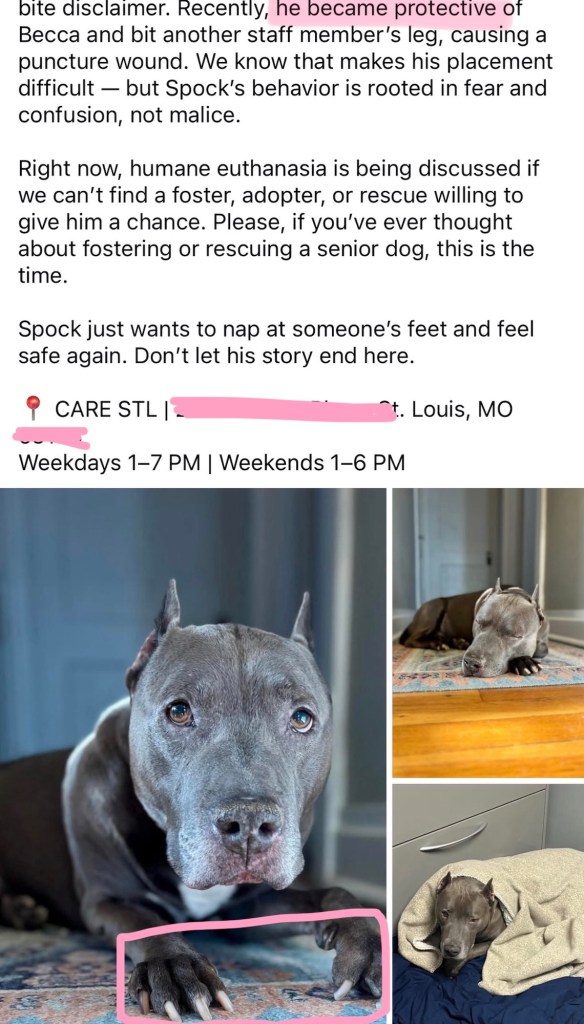
Let’s analyze #Spock’s story.
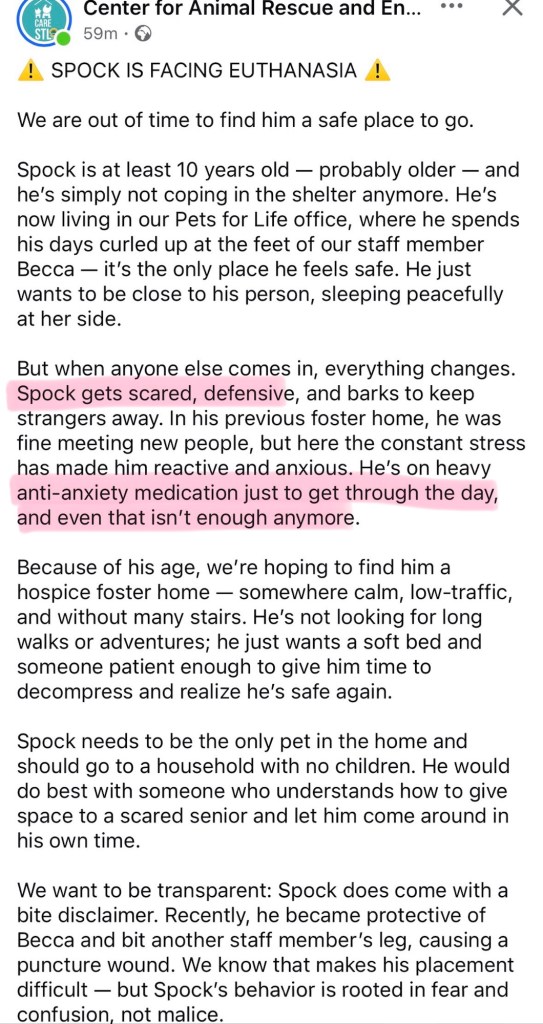
1. Appeal to Emotion (Pathos Over Logic)
The ad relies heavily on sadness, fear, and guilt: “Don’t let his story end here.” “He just wants to nap at someone’s feet.”
➡️ This emotional framing distracts from the objective facts: Spock has bitten a staff member, requires medication for aggression, and cannot safely live with people, children, or other pets.
The technique is known as #FOG (Fear, Obligation, Guilt) and is a red flag that you’re being targeted by a predatory personality.
2. Euphemistic Framing of Violence
The statement “Spock bit another staff member’s leg, causing a puncture wound” is immediately softened by “his behavior is rooted in fear and confusion, not malice.”
➡️ This reframes an act of aggression as emotionally justified, removing accountability and minimizing risk.
3. Shifting Responsibility / Victim Blaming
The narrative implies that Spock’s environment or others’ behavior “triggered” him rather than acknowledging his inherent instability: “The constant stress has made him reactive.”
➡️ This shifts blame from the dangerous dog to external factors, a hallmark of abuser narrative framing.
4. False Dichotomy
The ad frames the issue as: either someone adopts this dangerous animal, or he will die (“Don’t let his story end here”).
➡️ When an abuser creates a dichotomy, it is usually to force the target to feel unwarranted responsibility. This is an erosion of boundaries, forcing the target to “fix the problem” that was never theirs.
5. Appeal to Pity
Labeling this as a “hospice” placement is manipulative when the dog is not terminally ill but behaviorally unsafe.
➡️ The term “hospice” exploits the empathy people feel for dying pets, while concealing behavioral red flags that make placement dangerous.
6. Misleading “Transparency” Claim
The ad states, “We want to be transparent,” then buries crucial safety details midtext, softened by excuses.
➡️ True transparency would prioritize risk disclosure at the start, not hide it between emotional appeals.
7. Romanticizing Aggression
“Spock’s behavior is rooted in fear and confusion, not malice.”
➡️ This anthropomorphizes aggression, presenting it as emotionally relatable rather than biologically driven or dangerous, an emotional manipulation tactic used to override rational risk assessment.
8. Minimization / Normalization of Aggression
By describing the bite as a “puncture wound” rather than a violent attack, the post normalizes dangerous behavior.
➡️ The goal is to desensitize readers to violence by making it sound routine or minor.
9. Halo Effect
Emphasizing positive traits (“he just wants a soft bed and a person”) while downplaying serious behavioral risks exploits the reader’s instinct to see animals as redeemable.
➡️ This cognitive bias leads people to ignore clear danger signs.
10. False Equivalence with “Other Dogs” or “Stress”
By suggesting that Spock’s aggression is due to the shelter environment, it implies he is no different from any other frightened dog.
➡️ This ignores the crucial distinction between normal fear based stress and pathological aggression requiring extreme management and medication.
⚠️ Misinformation in the Ad:
1. Misrepresentation of Behavioral Risk
The ad conceals that Spock’s aggression is ongoing and escalating (“even heavy medication isn’t enough”).
➡️ Presenting him as a safe “hospice companion” misleads potential fosters and endangers the public.
2. Inaccurate Framing of Euthanasia
Describing humane euthanasia as “his story ending” manipulates readers into viewing a responsible decision as a moral failure.
➡️ Euthanasia can be an ethical and compassionate act when a dog poses risk and suffers chronic stress.
3. Omission of Breed Specific Context
The ad does not disclose the breed, though CARE STL’s population primarily consists of pit bull type dogs.
➡️ This omission withholds context crucial for assessing genetic and behavioral risk.
4. Misleading Use of “Reactive” Language
“Reactive” is a vague, sanitized term that conceals violent aggression.
➡️ This misleads the public into underestimating the danger of placing such dogs in homes.
⚠️ The Rescue Industry Problem
This post is a prime example of the rescue industrial complex: a growing, unregulated industry that markets high risk dogs to well meaning but untrained adopters. Shelters and rescues increasingly:
• Exploit emotional marketing rather than factual disclosure.
• Rebrand aggression as trauma to elicit sympathy and funding.
• Release unsafe dogs into homes with no liability, no consumer protections, and no regulation.
• Rely on volunteers and donors rather than licensed behaviorists or professionals.
The outcome is predictable: maulings, child deaths, and public distrust. These organizations often operate as nonprofits but use manipulative advertising to “flip” unadoptable animals for emotional or monetary profit.
True compassion means protecting both animals and people, not forcing unstable dogs into unsafe situations for optics. The rescue world urgently needs oversight, regulation, and liability standards, including mandatory transparency about bite histories, breed identification, and behavioral assessments.
#DogBiteAwareness #PublicSafety #RescueReform #AnimalWelfareEthics #AccountabilityMatters #ShelterTransparency
Original post:
“⚠️ SPOCK IS FACING EUTHANASIA ⚠️
We are out of time to find him a safe place to go.
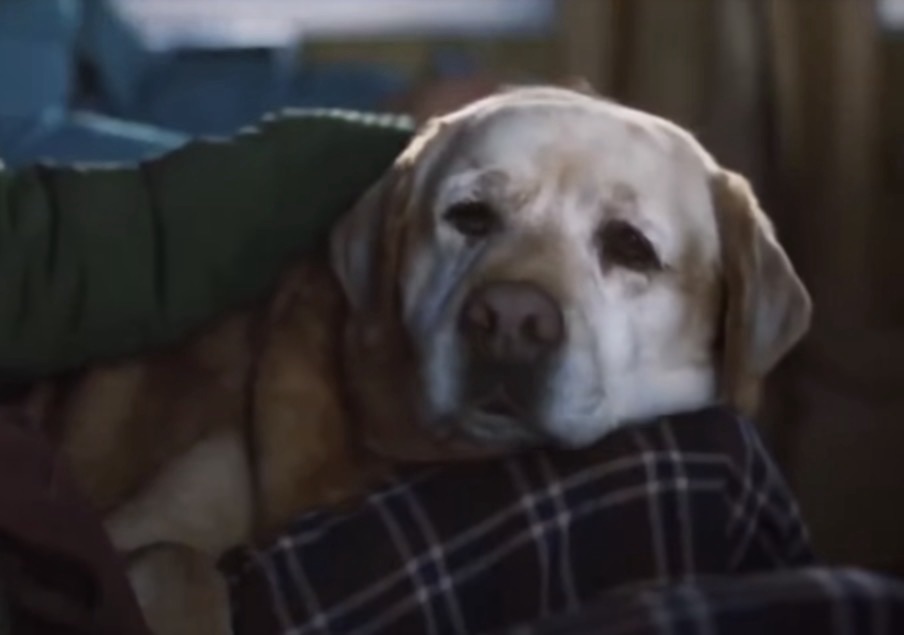
Spock is at least 10 years old — probably older — and he’s simply not coping in the shelter anymore. He’s now living in our Pets for Life office, where he spends his days curled up at the feet of our staff member Becca — it’s the only place he feels safe. He just wants to be close to his person, sleeping peacefully at her side.
But when anyone else comes in, everything changes. Spock gets scared, defensive, and barks to keep strangers away. In his previous foster home, he was fine meeting new people, but here the constant stress has made him reactive and anxious. He’s on heavy anti-anxiety medication just to get through the day, and even that isn’t enough anymore.
Because of his age, we’re hoping to find him a hospice foster home — somewhere calm, low-traffic, and without many stairs. He’s not looking for long walks or adventures; he just wants a soft bed and someone patient enough to give him time to decompress and realize he’s safe again.
Spock needs to be the only pet in the home and should go to a household with no children. He would do best with someone who understands how to give space to a scared senior and let him come around in his own time.
We want to be transparent: Spock does come with a bite disclaimer. Recently, he became protective of Becca and bit another staff member’s leg, causing a puncture wound. We know that makes his placement difficult — but Spock’s behavior is rooted in fear and confusion, not malice.
Right now, humane euthanasia is being discussed if we can’t find a foster, adopter, or rescue willing to give him a chance. Please, if you’ve ever thought about fostering or rescuing a senior dog, this is the time.
Spock just wants to nap at someone’s feet and feel safe again. Don’t let his story end here.“
 Parents for Dog Bite Awareness
Leave a comment