

🐾🧠 𝗘𝗺𝗽𝗮𝘁𝗵𝘆 𝗗𝗶𝘀𝗼𝗿𝗱𝗲𝗿𝘀: 𝗪𝗵𝘆 𝗦𝗼𝗺𝗲 𝗣𝗲𝗼𝗽𝗹𝗲 𝗙𝗲𝗲𝗹 𝗠𝗼𝗿𝗲 𝗙𝗼𝗿 𝗗𝗼𝗴𝘀 𝗧𝗵𝗮𝗻 𝗛𝘂𝗺𝗮𝗻𝘀 🧠🐾
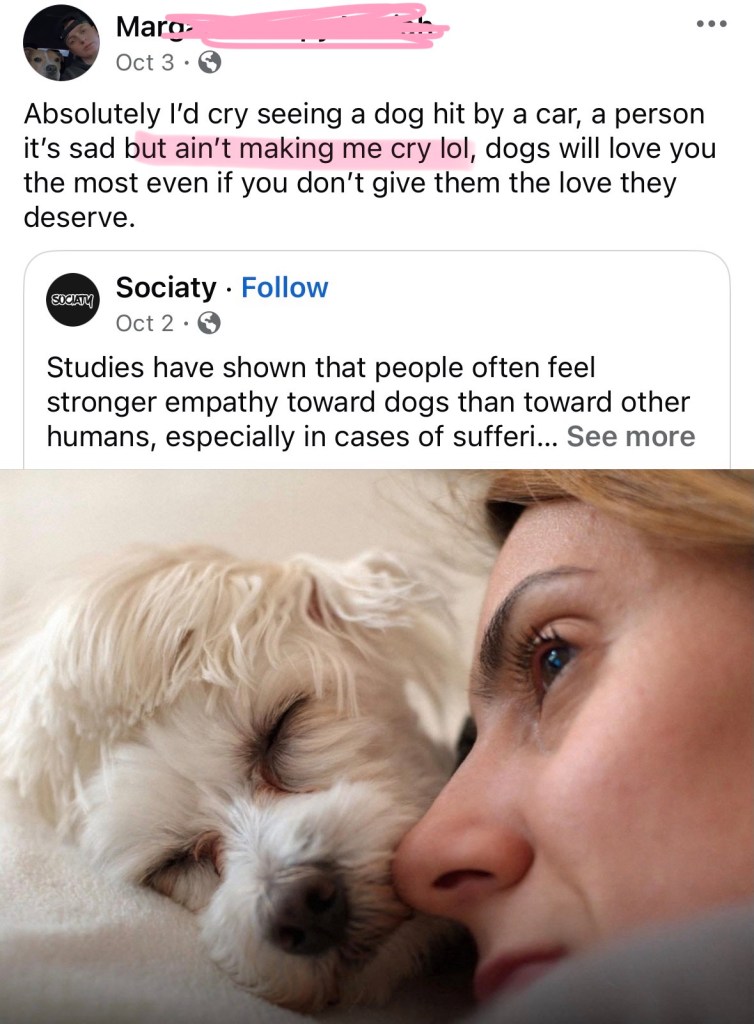
It’s a modern paradox: many people express more emotional distress when an aggressive dog is euthanized than when a child is mauled. Scroll through any tragic dog attack story, and you’ll find comments defending the animal, blaming the victim, and rationalizing the harm.
Why does this happen? Behavioral science provides several answers, and they reveal deeper social and psychological issues that extend far beyond the dog world.
⚖️ 𝗧𝗵𝗲 𝗣𝘀𝘆𝗰𝗵𝗼𝗹𝗼𝗴𝘆 𝗼𝗳 𝗠𝗶𝘀𝗱𝗶𝗿𝗲𝗰𝘁𝗲𝗱 𝗘𝗺𝗽𝗮𝘁𝗵𝘆
Empathy is not always healthy or accurate.
Research shows that narcissistic, neurotic, and antisocial traits can distort empathy, redirecting it toward controllable or idealized beings like dogs while withdrawing it from complex or vulnerable humans.
This isn’t true compassion. It’s ego driven pseudo empathy, rooted in control, projection, and avoidance.
• 🧩 Narcissistic personalities often express empathy selectively when it boosts their self image or provides emotional validation. Dogs, being unconditionally responsive and nonconfrontational, become safe recipients for that shallow empathy.
• ⚡ Antisocial personalities (those high in psychopathy or sadism) may express “care” for animals as moral camouflage. This helps them appear kind or “softhearted,” masking the cruelty or aggression they display toward humans.
• 🌫️ Neurotic or trauma bonded individuals may fixate on animals as emotional surrogates because human relationships feel threatening, unpredictable, or guilt inducing.
The result: a displacement of empathy away from people (who require moral accountability and reciprocal care) and toward animals (who do not).
🧬 𝗪𝗵𝗲𝗻 𝗕𝗿𝗮𝗶𝗻 𝗦𝗰𝗶𝗲𝗻𝗰𝗲 𝗠𝗲𝗲𝘁𝘀 𝗠𝗼𝗿𝗮𝗹 𝗖𝗼𝗴𝗻𝗶𝘁𝗶𝗼𝗻
Studies using fMRI scans reveal that empathy for humans and empathy for animals activate overlapping but not identical neural circuits.
In individuals with certain personality disorders or affective dysregulation, the brain’s mirror neuron response to human suffering is muted, while emotional activation toward animals remains strong.
This means some people literally feel less when a child is attacked. And it’s not because they are uninformed, but because their brains are wired to disconnect from human pain.
Over time, online echo chambers reinforce this misalignment: communities that glorify “dog love” while minimizing human suffering provide constant emotional rewards for moral inversion.
🩸 𝗪𝗵𝗲𝗻 𝗘𝗺𝗽𝗮𝘁𝗵𝘆 𝗧𝘂𝗿𝗻𝘀 𝗩𝗶𝗰𝘁𝗶𝗺 𝗕𝗹𝗮𝗺𝗶𝗻𝗴
When a toddler is killed by a fighting breed, you’ll often read comments like:
“The parents weren’t watching.”
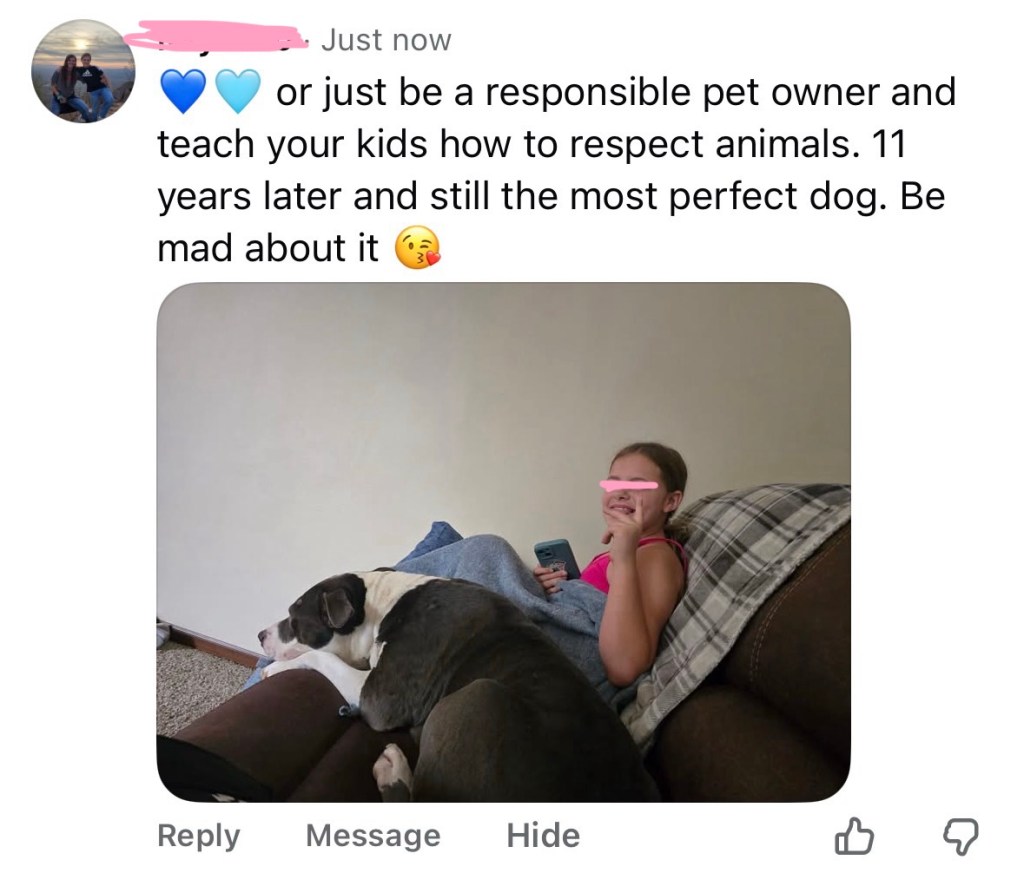
“The kid provoked the dog.”
“Don’t blame the breed.”
This is a psychological defense mechanism. It creates a way for onlookers to maintain their illusion of safety. If they can blame the victim, they can believe “it won’t happen to me.”
But this logic mirrors abuser cognition: deny harm, shift blame, protect the perpetrator.
It’s the same thinking that underlies domestic violence, cult loyalty, and institutional abuse.
When empathy is hijacked by disorder or ideology, it stops protecting the vulnerable and starts shielding the violent.
🚨 𝗣𝘂𝗯𝗹𝗶𝗰 𝗦𝗮𝗳𝗲𝘁𝘆 𝗠𝗲𝗮𝗻𝘀 𝗖𝗹𝗲𝗮𝗿 𝗘𝗺𝗽𝗮𝘁𝗵𝘆
Healthy empathy distinguishes between predator and prey, cause and effect, choice and innocence.
If our society continues to romanticize dangerous dog breeds while vilifying their victims, we reinforce a moral disorder that enables violence.
True compassion means protecting those who cannot defend themselves: not defending those who choose to harm.
Let’s realign empathy with accountability, evidence, and human safety.
-JL ©️
#️⃣ #DogBiteAwareness #ProtectKids #PublicSafety #ForensicPsychology #PersonalityDisorders #Narcissism #EmpathyDisplacement #MoralInversion #PitbullCrisis #AccountabilityFirst #StopTheBlame #VictimProtection #SocialPsychology #CriticalThinking #SafeCommunities
 Parents for Dog Bite Awareness
Leave a comment