𝗗𝗼𝗴 𝗥𝗲𝘀𝗰𝘂𝗲 𝗔𝗱𝘀 𝗮𝗿𝗲 𝗯𝗲𝗰𝗼𝗺𝗶𝗻𝗴 𝗺𝗼𝗿𝗲 𝗺𝗮𝗻𝗶𝗽𝘂𝗹𝗮𝘁𝗶𝘃𝗲: 𝗵𝗲𝗿𝗲’𝘀 𝗵𝗼𝘄 𝘆𝗼𝘂 𝗰𝗮𝗻 𝘀𝗽𝗼𝘁 𝗶𝘁.
A recent viral rescue post is a near perfect example of psychological pressure dressed up as compassion.
Let’s unpack the tactics.
-JL #DBA
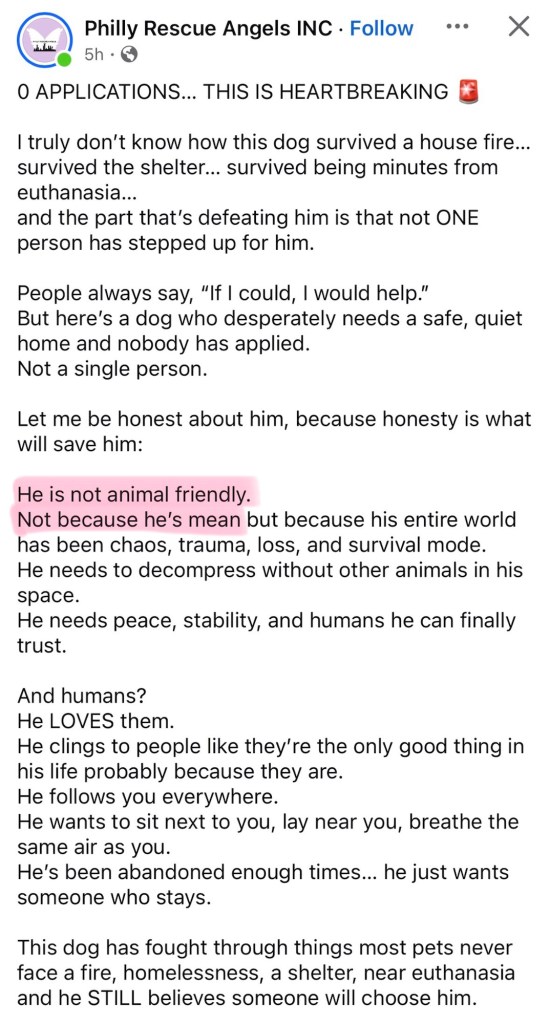
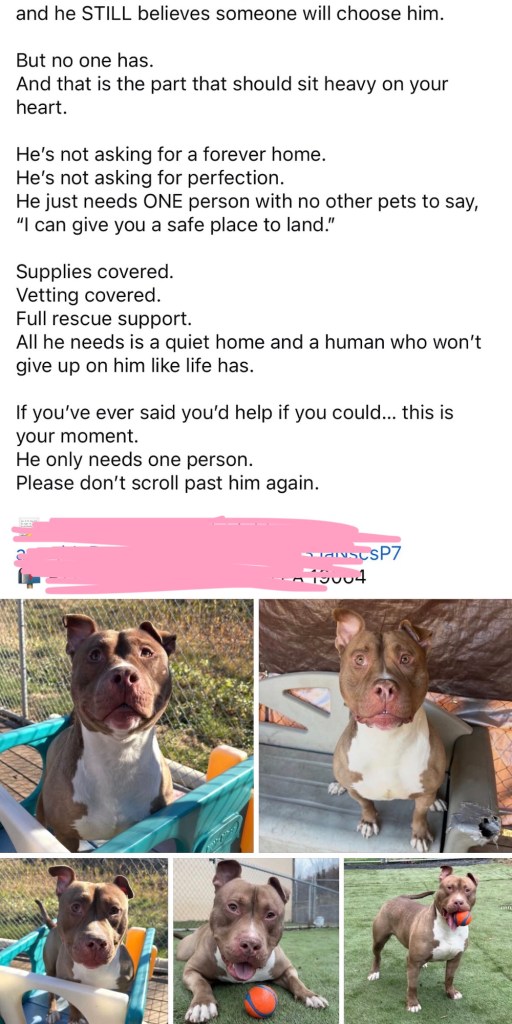
𝗧𝗮𝗰𝘁𝗶𝗰 𝟭: Trauma baiting for clicks
The dog is framed as having survived:
• a house fire
• homelessness
• a shelter
• being “minutes from euthanasia”
There is no evidence for any of this. Trauma is used as a marketing hook, not verifiable fact. This rhetoric primes readers to ignore red flags and feel morally obligated to adopt. Besides the part where a dog would be unaware of evading euth by minutes.
𝗧𝗮𝗰𝘁𝗶𝗰 𝟮: Manufactured urgency
“𝗡𝗼 𝗼𝗻𝗲 𝗵𝗮𝘀 𝗮𝗽𝗽𝗹𝗶𝗲𝗱.”
“𝗧𝗵𝗶𝘀 𝗶𝘀 𝘆𝗼𝘂𝗿 𝗺𝗼𝗺𝗲𝗻𝘁.”
“𝗗𝗼𝗻’𝘁 𝘀𝗰𝗿𝗼𝗹𝗹.”
These lines use the same pressure techniques seen in high pressure sales environments but with worse guilt:
You must act now, or you’re personally responsible for a death.
This is emotional blackmail, not informed adoption counseling.
𝗧𝗮𝗰𝘁𝗶𝗰 𝟯: Rebranding aggression as “trauma”
The dog is openly dog aggressive, but the ad reframes this as:
• “not because he’s mean”
• “chaos, trauma, loss, survival”
• “he needs peace”
This shifts blame from innately dangerous behaviors to an emotional narrative. It creates guilt for anyone who recognizes legitimate safety concerns.
𝗧𝗮𝗰𝘁𝗶𝗰 𝟰: 𝗨𝗻𝘀𝗮𝗶𝗱 𝗥𝗲𝗱 𝗙𝗹𝗮𝗴𝘀
The ad does not say:
• whether he has a bite history
• whether he has been evaluated by a behaviorist
• whether he is safe with children
• whether his aggression has escalated
• why “minutes from euthanasia” occurred
• whether he lunges, snaps, guards, redirects, or has triggered incidents
These omissions are deliberate.
Rescue marketing often hides the most critical information behind poetic language.
𝗧𝗮𝗰𝘁𝗶𝗰 𝟱: Trauma bonding the potential adopter
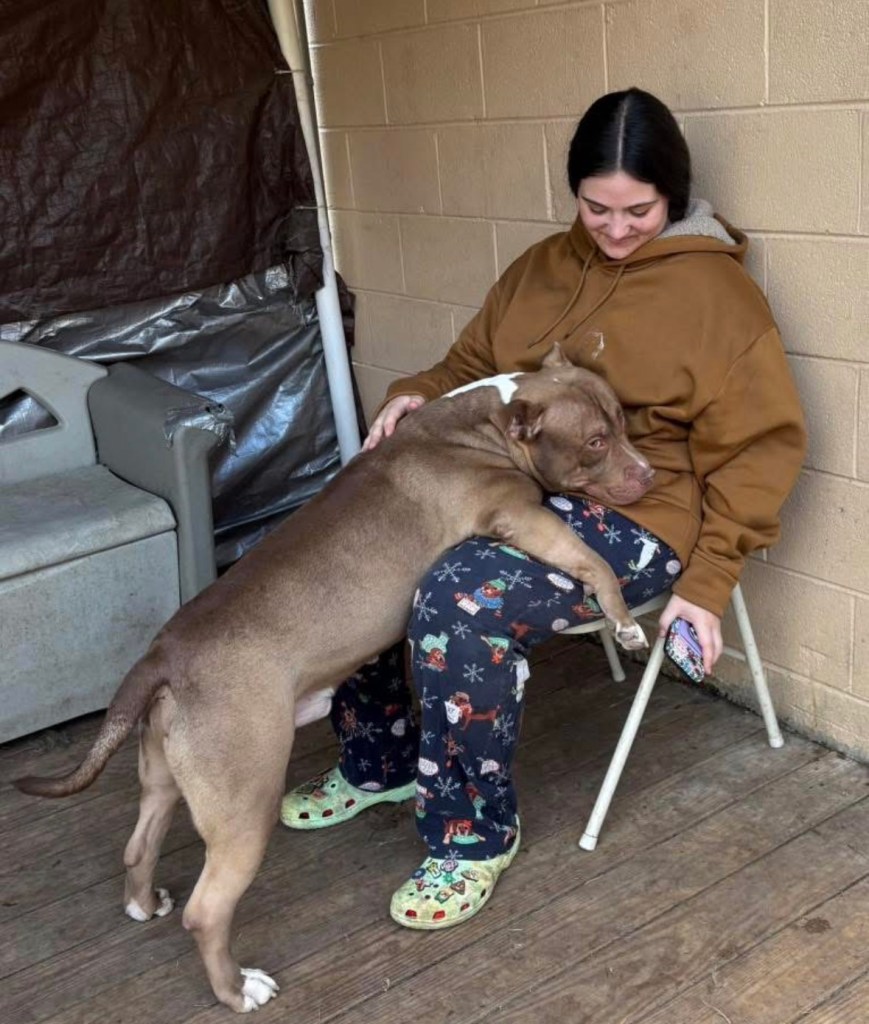
“He clings to people.”
“He follows everywhere.”
“He just wants someone who stays.”
This is textbook trauma bonding language and replicates the same emotional button pushing used in toxic relationship cycles. It’s often known as love bombing. The adopter is cast not as a pet owner, but as the only person capable of saving a broken soul.
This is not ethical dog placement.
It is psychological manipulation.
𝗧𝗮𝗰𝘁𝗶𝗰 𝟲: Creating shame around choosing safety
“No one has chosen him.”
“This should sit heavy on your heart.”
“Don’t scroll again.”
The message?
If you prioritize safety, your family, your existing pets, or your housing restrictions you should feel guilty. This is part of the FOG (Fear Obligation Guilt) sign that you’re dealing with an abuser.
This is how dangerous dogs end up in unsuitable homes and evade euthanasia that professionals deemed necessary.
𝗧𝗮𝗰𝘁𝗶𝗰 𝟳: Promising “full support” without defining it
“Supplies covered.”
“Full rescue support.”
What does that mean?
• Will they fund behaviorists?
• Will they reclaim him if he bites?
• Will they cover liability?
• Will they take him back if the adopter becomes unsafe?
Support is vague by design and likely lacking, especially if the layperson who buys this dog is unfamiliar with adoption contracts and doesn’t ensure adequate legal language.
𝗪𝗵𝘆 𝘁𝗵𝗶𝘀 𝗺𝗮𝘁𝘁𝗲𝗿𝘀
These ads aren’t just misleading, they’re dangerous.
They pressure unprepared people into taking dogs with unknown or high risk behavior, often to avoid euthanasia decisions rescues refuse to make.
And when the dog injures another animal or a child, the same rescues claim “no one could have predicted it” or pivot to blame the adopter for making a mistake.
We must stop treating emotional manipulation as animal advocacy.
Transparency saves lives.
Marketing does not.
#dogbiteawareness #rescueismyfavoritebreed #rescuedog
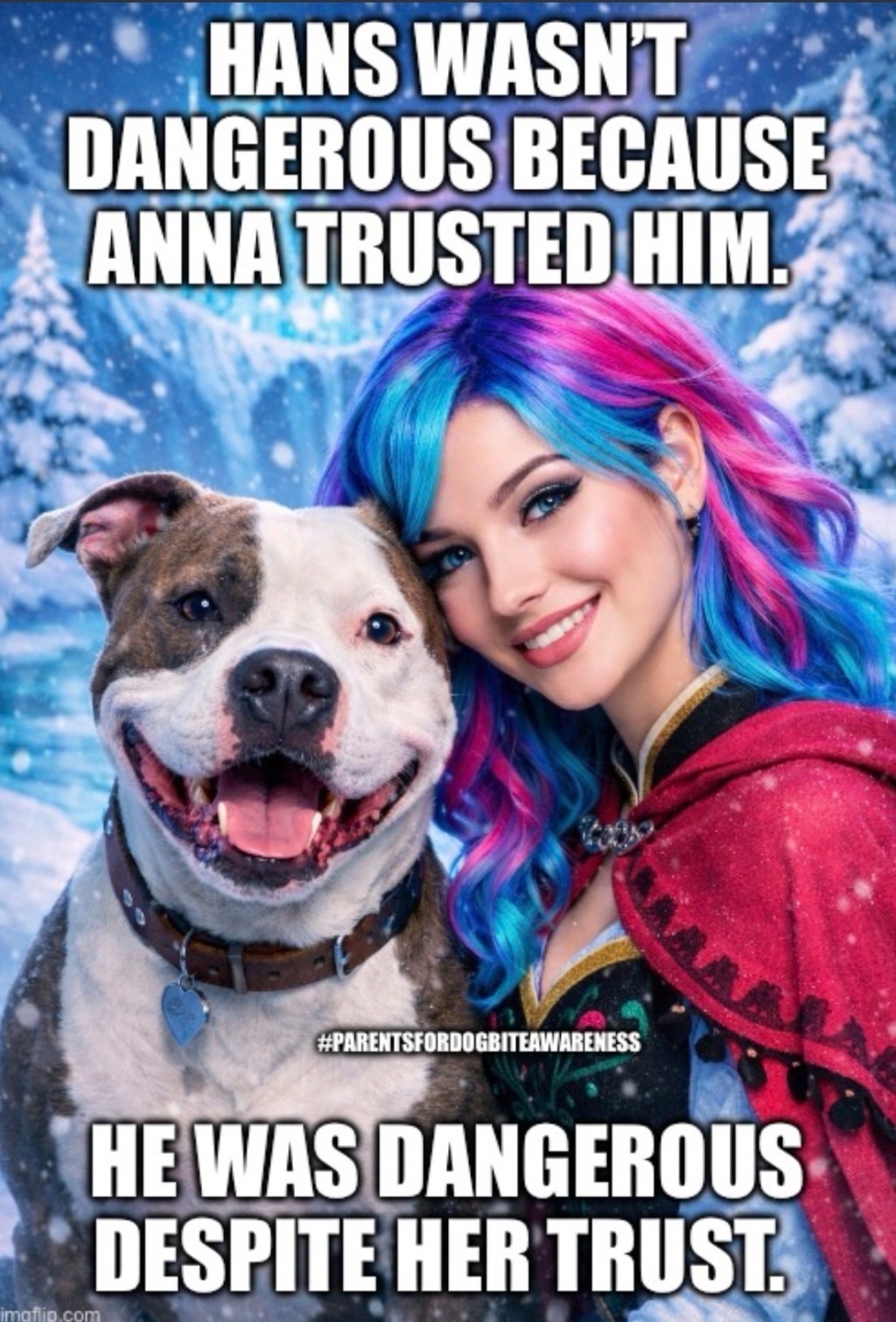

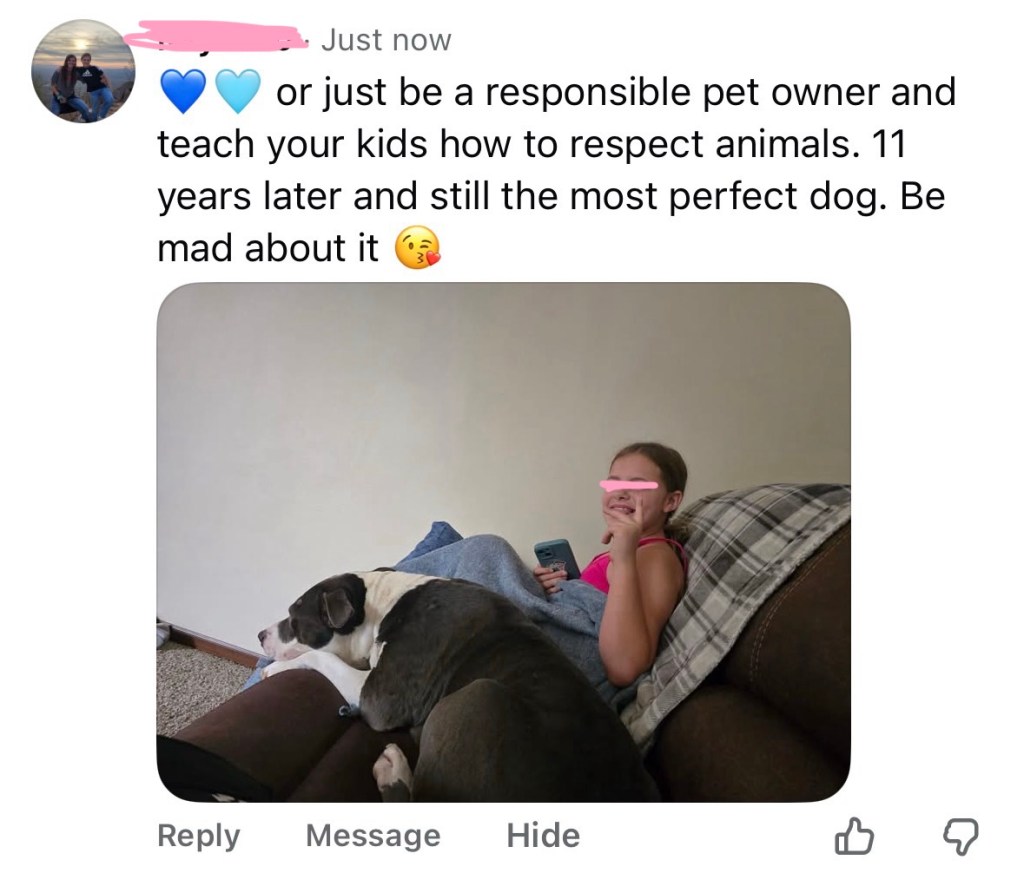
 Parents for Dog Bite Awareness
Leave a comment