Let’s unpack the cognitive tactics Kayla is using in her comments here. It’s important to understand that bloodsport dog advocates tend to be convincing themselves more than anyone they engage. What they say reveals their inner conflict.
-JL #DBA
𝟭. 𝗖𝗼𝗴𝗻𝗶𝘁𝗶𝘃𝗲 𝗗𝗶𝘀𝘀𝗼𝗻𝗮𝗻𝗰𝗲
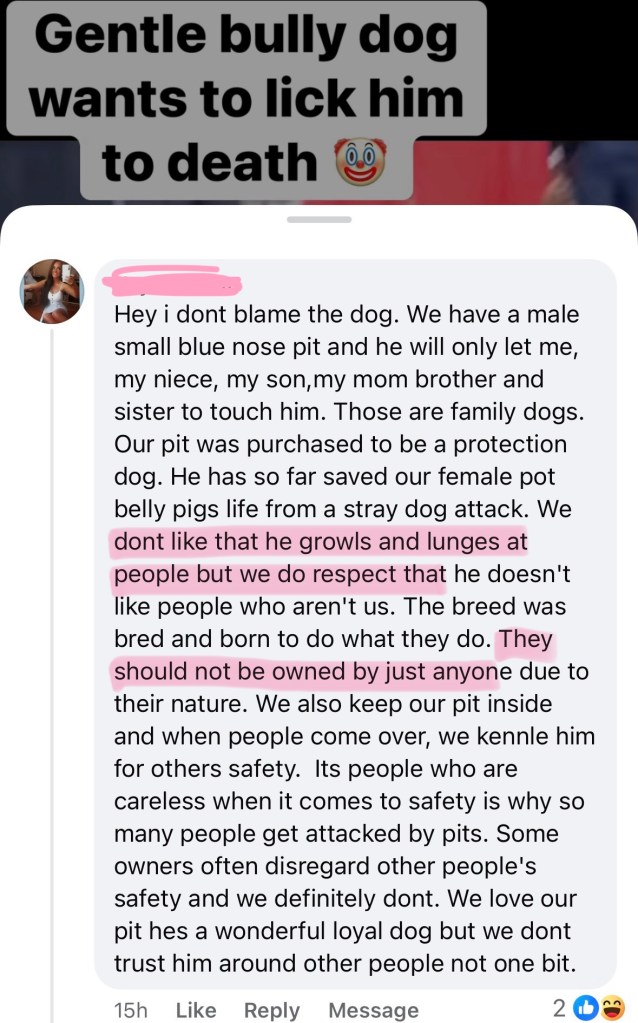
Kayla is holding two incompatible beliefs:
• 𝗕𝗲𝗹𝗶𝗲𝗳 𝗔: “We love him, he’s loyal, he’s wonderful.”
• 𝗕𝗲𝗹𝗶𝗲𝗳 𝗕: “He growls, lunges at people, and can’t be trusted around anyone.”
That contradiction creates psychological discomfort. To resolve it, she builds elaborate justifications:
– “𝗙𝗮𝗺𝗶𝗹𝘆 𝗱𝗼𝗴𝘀”
– “𝗕𝗿𝗲𝗱 𝗮𝗻𝗱 𝗯𝗼𝗿𝗻 𝘁𝗼 𝗱𝗼 𝘄𝗵𝗮𝘁 𝘁𝗵𝗲𝘆 𝗱𝗼”
– “𝗟𝗲𝗮𝗿𝗻𝗲𝗱 𝗽𝗿𝗼𝘁𝗲𝗰𝘁𝗶𝗼𝗻 𝗱𝗼𝗴”
These phrases reduce the internal tension between loving a dog and knowing the dog is dangerous. In other words, she’s attempting to reassure and soothe herself. This means she already knows the dog represents a lethal risk to her children. So you don’t need to say that.
𝟮. 𝗔𝗺𝗯𝗶𝘃𝗮𝗹𝗲𝗻𝘁 𝗔𝗻𝘅𝗶𝗼𝘂𝘀 𝗔𝘁𝘁𝗮𝗰𝗵𝗺𝗲𝗻𝘁
People who experience child abuse and trauma growing up often display what’s called an “ambivalent anxious attachment” to people and animals. (This is what classic domestic abusers use to isolate their targets as well.) Her comments show classic signs:
• Over identification with the dog
• Viewing the dog as part of the inner safety circle despite knowing it’s dangerous
• Distrust of outsiders
• Feeling responsible for regulating the dog’s emotions and actions
This attachment pattern often appears in owners of volatile animals. The “violence wheel” causes them to bond more intensely because the dog is unpredictable. First, they experience the honeymoon stage with love bombing, then tension escalates and explodes and the cycle repeats itself. Victims in this cycle often dissociate from the violent stages, causing them to vehemently deny any attacks.
𝟯. 𝗦𝗽𝗲𝗰𝗶𝗮𝗹 𝗣𝗹𝗲𝗮𝗱𝗶𝗻𝗴 𝗙𝗮𝗹𝗹𝗮𝗰𝘆
Victims of abuse often become hyper responsible for the offender’s actions, erasing individual boundaries. This is the “fixer” pattern. You’ll find victims proudly claiming they’re stronger, smarter, better than average so they can handle it. They’ll suggest only certain super empaths can unlock the little child inside the monster. Notice how sherepeatedly argues her dog is:
• dangerous
• lunging
• untrustworthy
…but also insists this situation is okay because she personally can handle it.
That is special pleading:
“It’s fine because it’s me.”
This allows her to normalize an unsafe animal by framing herself as uniquely competent.
𝟰. 𝗜𝗻 𝗚𝗿𝗼𝘂𝗽 / 𝗢𝘂𝘁 𝗚𝗿𝗼𝘂𝗽 𝗺𝗼𝗱𝗲
Kayla creates rigid categories. This one represents the highest societal risk bc it precedes dehumanization of others. Only the ingroup is human or worthy of rights and respect. Everyone else is the out group and therefore it’s ok if they’re maimed, or even preferably killed. Besides being a sociological practice, it can also appear in several mental health conditions due to delusions of paranoia and delusions of persecution. (The pit haters just want to exterminate my precious baby!)
𝗜𝗻 𝗴𝗿𝗼𝘂𝗽:
• dog
• immediate family
• rescue people
• people who “get” pits
𝗢𝘂𝘁 𝗴𝗿𝗼𝘂𝗽:
• strangers
• neighbors
• “people who don’t know how to handle them”
This cognitive split justifies the dog’s aggression by redirecting blame onto the out group. Any attack that happens is therefore justified.
𝟱. 𝗟𝗼𝗰𝘂𝘀 𝗼𝗳 𝗖𝗼𝗻𝘁𝗿𝗼𝗹 𝗦𝗵𝗶𝗳𝘁𝗶𝗻𝗴
An external locus of control is a fancy way of saying blame shifting. She shifts responsibility away from the dog/genetics and onto:
• other people
• strangers approaching
• owners who “don’t handle them right”
This protects her self image and the dog’s image. It also keeps her from grappling with the reality of the breed’s behavioral risks.
𝟲. 𝗥𝗼𝗹𝗲 𝗠𝗶𝘀𝗹𝗮𝗯𝗲𝗹𝗶𝗻𝗴 / 𝗦𝗲𝗹𝗳 𝗦𝗼𝗼𝘁𝗵𝗶𝗻𝗴 𝗟𝗮𝗯𝗲𝗹𝘀
This form of gaslighting is commonly used in the pit topic, such as reframing aggression to reactivity. She lists the contradictions:
• “family dog”
• “protection dog”
• “wonderful loyal dog”
• “not safe around people”
These contradictory labels are self soothing. They let her reframe severe aggression as:
“This is just what he is meant to do.” Which removes personal discomfort.
- 𝗢𝘃𝗲𝗿𝗰𝗼𝗻𝗳𝗶𝗱𝗲𝗻𝗰𝗲 𝗘𝗳𝗳𝗲𝗰𝘁
Kayla displays signs of invincibility and over confidence more consistent with young adolescents. It’s a normal cognitive stage that tends to dissipate as the brain matures. She lists out key signs:
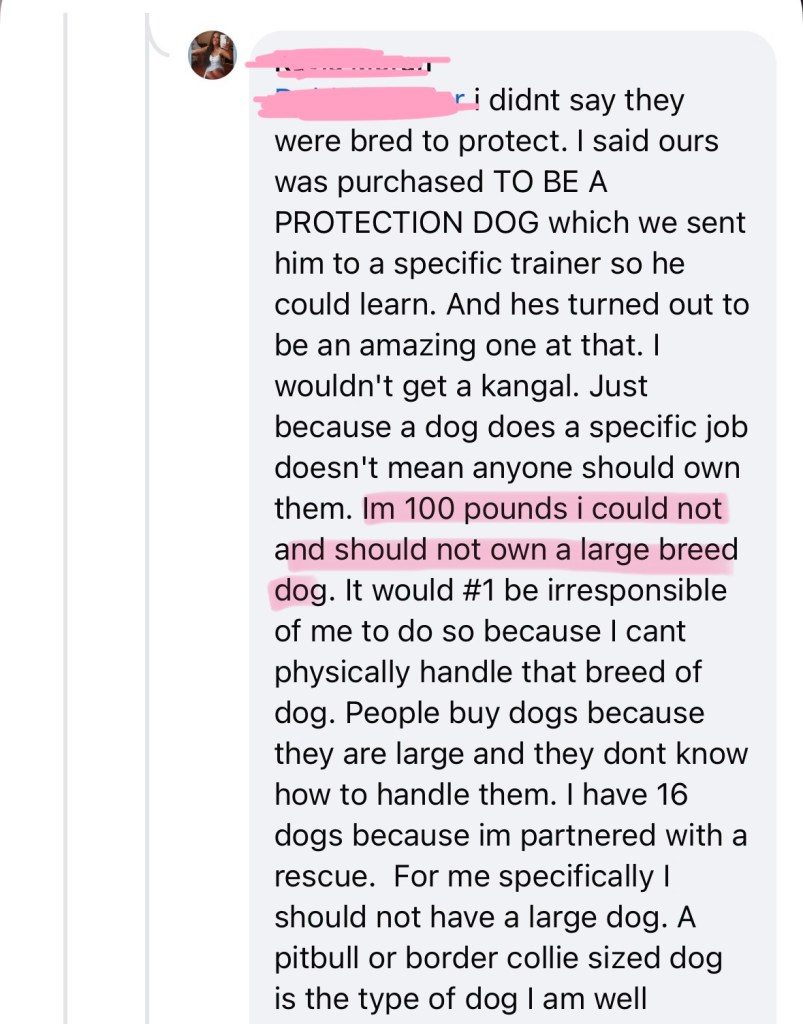
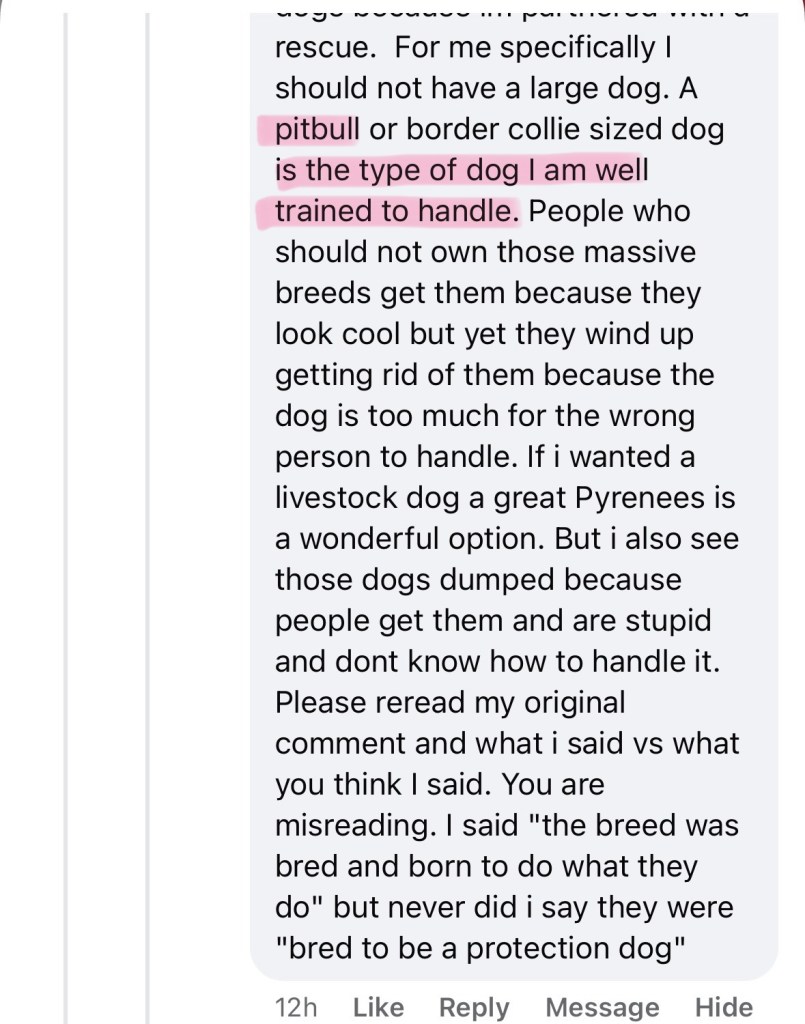
• 100 pounds
• owns 16 dogs
• partnered with a rescue
• believes she is “trained to handle” them
This creates inflated confidence in managing risk. Here she has little formal knowledge + lots of anecdotal experience = perceived expertise. It’s a deadly mix.
- 𝗘𝗴𝗼 𝗧𝗵𝗿𝗲𝗮𝘁 → 𝗗𝗲𝗳𝗲𝗻𝘀𝗶𝘃𝗲 𝗦𝗵𝗶𝗳𝘁
Debbie challenges Kayla’s claims factually.
Kayla’s response:
• becomes more verbose
• repeats herself
• insists Debbie “misread”
• adds more personal details
• escalates into explanations of her weight, rescue work, etc.
This is classic ego threat defense. When her narrative is questioned, she adds more detail to reinforce her self concept. In other words, Debbie is arguing about the subject itself such as hereditary genetics. But it doesn’t matter bc Kayla is interpreting everything as a personal judgment about her public image and self worth. This is common with immature brains or disordered adults and prevents any real educational engagement. Nothing Debbie says will help bc Kayla is focused solely on trying to protect her image.
𝗦𝘂𝗺𝗺𝗮𝗿𝘆 𝗣𝗿𝗼𝗳𝗶𝗹𝗲
Kayla’s reasoning pattern shows:
• cognitive dissonance
• identity based attachment to the dog
• emotional rationalization
• in group loyalty
• misunderstanding of working dog behavior
• inflated confidence
• reframing danger as responsibility
• avoidance of confronting risk
This is a textbook version of why pit advocacy circles are resistant to data and why dangerous behaviors are repeatedly normalized. The issue remains one rooted in a lifetime of trauma and abuse, structural brain differences, and even adult mental health conditions or personality disorders. Until we address the middle men (shelters) intentionally exploiting this societal trend, people like Kayla will continue to hoard dangerous animals.
Notice that if breeders and shelters had basic regulatory enforcement, Kayla would not own 16 bloodsport dogs. Society will always have people struggling with unresolved trauma or even being intentionally disordered. But we do not need to tolerate unethical breeders and shelters equipping them with lethal dogs.
 Parents for Dog Bite Awareness
Leave a comment