𝗗𝗼𝗴 𝗥𝗲𝘀𝗰𝘂𝗲 𝗔𝗱𝘀 𝗼𝗳𝘁𝗲𝗻 𝗺𝗮𝘀𝗸 𝗿𝗲𝗱 𝗳𝗹𝗮𝗴𝘀 𝗯𝗲𝗵𝗶𝗻𝗱 𝗵𝘂𝗺𝗼𝗿 𝗮𝗻𝗱 𝗰𝘂𝘁𝗲𝗻𝗲𝘀𝘀.
This rescue ad looks lighthearted on the surface, but beneath the playful wording are significant behavioral red flags, strategic omissions, and misleading framing.
𝗟𝗲𝘁’𝘀 𝗯𝗿𝗲𝗮𝗸 𝗱𝗼𝘄𝗻 𝘁𝗵𝗶𝘀 𝗿𝗲𝗰𝗲𝗻𝘁 𝗮𝗱 𝗳𝗼𝗿 𝗗𝗶𝗮𝗺𝗼𝗻𝗱.
-JL #DBA

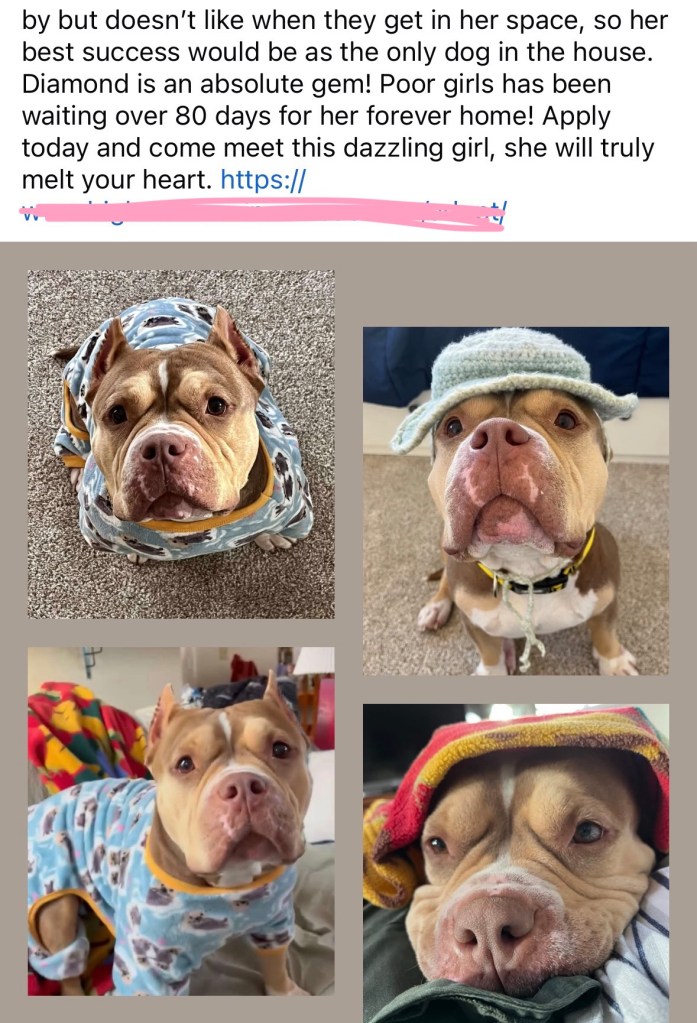
𝗧𝗮𝗰𝘁𝗶𝗰 𝟭: Infantilizing and glamorizing a high risk dog
The dog speaks in first person (“Hi, I’m Diamond!”), calls the staff her “PR lady,” and describes herself as:
• “a 10”
• “America’s Next Top Paw-del”
• “your one and only”
• “I already love you”
This creates an illusion of a harmless, silly, social pet. It’s a classic tactic to make adopters lower their guard and view the dog like a plush toy, not a potentially dangerous animal with known incompatibilities.
𝗧𝗮𝗰𝘁𝗶𝗰 𝟮: Rebranding aggression as a “hard past”
This line is deeply concerning:
“I’m not that comfy living with other animals because I’ve had a hard past.”
This replaces the reality of dog intolerance and dog aggression with a vague, sympathetic story.
The ad never states:
• whether she has attacked another dog
• whether she has escalated
• whether she has a bite history
• whether she has been assessed by a behaviorist
• whether she is safe around any other animals or different people such as the vet, visitors, men, etc.
Calling aggression “a hard past” is deceptive and shifts blame from behavior to narrative.
𝗧𝗮𝗰𝘁𝗶𝗰 𝟯: Mixing concerning traits with cute filler
Listing traits like:
• housebroken
• good with older kids
• cuddly
• loves belly rubs
• brings her Kong politely
Redirects potential buyers back to classic dog expectations by reminding them of “comfort traits” to help offset the more alarming note that she is an only dog. This technique is designed to make readers feel the negatives are “balanced out,” when in reality the negatives are major safety considerations.
𝗧𝗮𝗰𝘁𝗶𝗰 𝟰: Minimizing risk through careful wording
The phrase:
“curious about other dogs when passing by but doesn’t like when they get in her space”
This language is rescue industry code. It often translates to:
• reactive
• lunges
• doesn’t tolerate proximity
• may escalate quickly
• likely to redirect under stress
If she simply “didn’t like dogs in her space,” she wouldn’t need to be the only dog in the home. This is a softening technique to hide how serious the issue likely is.
𝗧𝗮𝗰𝘁𝗶𝗰 𝟱: Appeal to sympathy through selective storytelling
“Survived Oklahoma,”
“waiting 80 days,”
“poor girl,”
“stunning,”
“dazzling,”
“will melt your heart.”
These lines guide readers toward emotion driven adoption, not informed decision making. It’s a structure designed to override logical risk assessment with pity and guilt.
𝗧𝗮𝗰𝘁𝗶𝗰 𝟲: Omission of critical safety information
The ad never addresses:
• bite history
• reactivity level
• prey drive
• tolerance for handling
• behavior around visitors
• startle response
• guarding behaviors
• stress triggers
• whether she has been tested around kids or cats
• whether she has failed previous placements
• why she was transferred from Oklahoma
These omissions are standard in rescue marketing and particularly entrap vulnerable buyers or novices, two groups who are the least equipped to own a high risk dog.
𝗧𝗮𝗰𝘁𝗶𝗰 𝟳: Persuasion through flawless branding
The ad describes her as:
• stunning
• a gem
• perfect chin
• star personality
• amazing
• dazzling
This creates a psychological contrast with the single negative listed (“no other animals”). The intended effect: the adopter feels the flaw must be minor or manageable.
This erases the reality that single pet only requirements are usually associated with violent risk, unresolved aggression, or failed behavior tests.
𝗧𝗵𝗲 𝗽𝗿𝗼𝗯𝗹𝗲𝗺: 𝗧𝗵𝗶𝘀 𝗶𝘀 𝗻𝗼𝘁 𝗶𝗻𝗳𝗼𝗿𝗺𝗲𝗱 𝗰𝗼𝗻𝘀𝗲𝗻𝘁.
This type of ad manipulates potential adopters into underestimating behavioral risks. By dressing serious issues in cute language and omitting essential safety information, rescues create unsafe placements for neighborhoods, children, pets, and the dog herself. Emotional adoption pitches do not replace complete, transparent behavioral disclosures.
#dogbiteawareness #rescueismyfavoritebreed #rescuedog


 Parents for Dog Bite Awareness
Leave a comment