
🧠 Let’s unpack the issues here.
#DBA
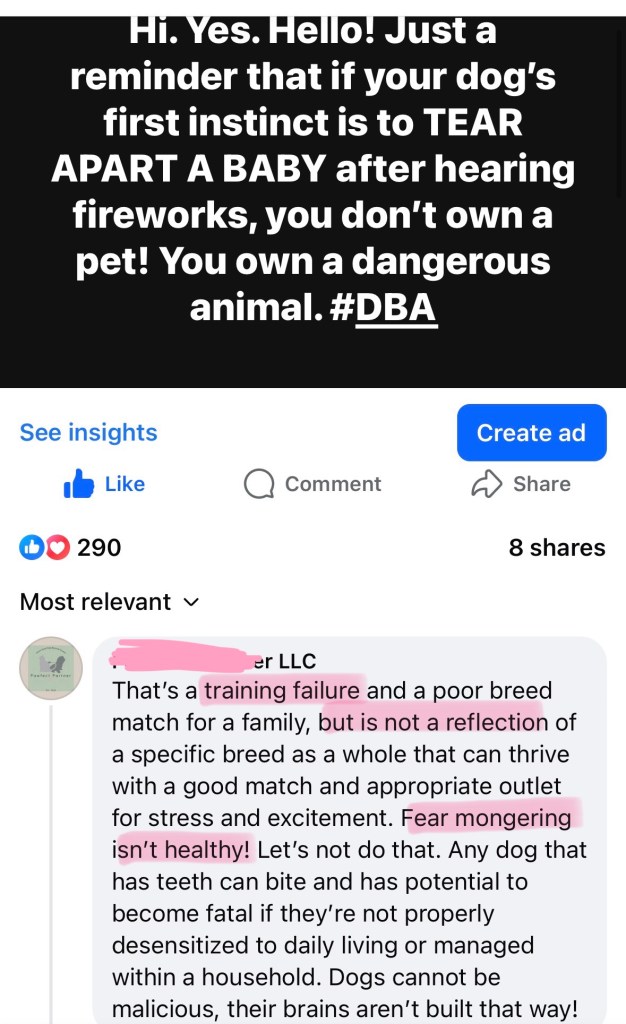
Every time a child is mauled to death, a predictable chorus rises from the same corners of the dog world:
“That’s a training issue.”
“Any dog can bite.”
“Don’t fearmonger!”
These phrases sound compassionate but they are ideological shields, not truths. They function to protect an image, not human and dog safety.
𝗕𝗿𝗲𝗲𝗱 𝗠𝗮𝘁𝘁𝗲𝗿𝘀
Pretending otherwise is antiscience. Modern dog breeds exist precisely because humans shaped behavior through selective breeding for task specific drives.
Border Collies herd. Huskies pull. Retrievers fetch.
And pit type dogs were engineered to attack large animals, ignore pain, and fight to the death.
To suggest that these traits vanish with “proper training” is as naïve as believing you can desensitize a Border Collie from noticing sheep.
𝗧𝗵𝗲 𝗙𝗮𝗹𝘀𝗲 𝗘𝗾𝘂𝗮𝗹𝗶𝘁𝘆 𝗧𝗮𝗰𝘁𝗶𝗰
“Any dog can bite” sounds inclusive, but it conceals risk by flattening data.
The reality: fatal attacks are not distributed equally. Year after year, pit bulls and their mixes account for the overwhelming majority of deaths and disfigurements across North America.
This pattern persists across training levels, home types, and environments, disproving the “it’s all how they’re raised” myth.
𝗪𝗵𝘆 𝗧𝗵𝗶𝘀 𝗙𝗿𝗮𝗺𝗶𝗻𝗴 𝗣𝗲𝗿𝘀𝗶𝘀𝘁𝘀
Trainers, rescues, and influencers benefit from public denial. They rely on adoption pipelines and feel good narratives for their livelihoods.
Admitting that certain breeds pose inherently higher risks would threaten funding, reputation, and ideology.
𝗧𝗵𝗲 𝗗𝗮𝗻𝗴𝗲𝗿 𝗼𝗳 𝗡𝗶𝗰𝗲 𝗟𝗶𝗲𝘀
Saying “don’t fearmonger” might sound kind, but it’s actually emotional grooming: teaching people to doubt their instincts and suppress concern.
Fear is not hate.
Fear is a rational response to measurable risk.
When we suppress it, we enable tragedy.
𝗧𝗵𝗲 𝗕𝗶𝗴𝗴𝗲𝗿 𝗣𝗶𝗰𝘁𝘂𝗿𝗲
Just as society once had to confront the tobacco lobby, the “any dog can bite” narrative must be recognized as an industry defense, not truth.
Until we speak plainly about genetic risk and prioritize human life over PR slogans, the death toll will continue.
𝗕𝗼𝘁𝘁𝗼𝗺 𝗹𝗶𝗻𝗲:
It’s not fearmongering to acknowledge that some dogs are inherently dangerous.
It’s willful negligence to pretend they’re not.



 Parents for Dog Bite Awareness
Leave a comment