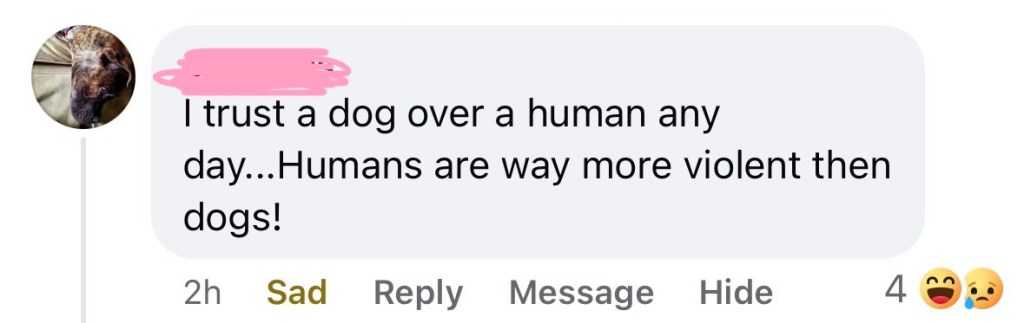

You see the phrase everywhere: 𝗜 𝘁𝗿𝘂𝘀𝘁 𝗮 𝗱𝗼𝗴 𝗼𝘃𝗲𝗿 𝗮 𝗵𝘂𝗺𝗮𝗻 𝗮𝗻𝘆 𝗱𝗮𝘆! 𝗛𝘂𝗺𝗮𝗻𝘀 𝗮𝗿𝗲 𝗺𝗼𝗿𝗲 𝘃𝗶𝗼𝗹𝗲𝗻𝘁 𝘁𝗵𝗮𝗻 𝗱𝗼𝗴𝘀!
It’s usually posted under stories about severe dog attacks, especially those involving bloodsport dogs. And on the surface, it sounds poetic, a little wounded, a little rebellious.
But if you scratch beneath the surface, it isn’t actually about dogs. It’s about trauma.
-JL #DBA
𝗧𝗿𝗮𝘂𝗺𝗮 𝗨𝗻𝗱𝗲𝗿𝗰𝘂𝘁𝘀 𝗡𝗼𝗿𝗺𝗮𝗹 𝗥𝗶𝘀𝗸 𝗣𝗲𝗿𝗰𝗲𝗽𝘁𝗶𝗼𝗻
A person who lived through deep childhood trauma (especially prolonged exposure to unpredictable violence) often develops a baseline worldview where danger is normal and pain is expected. When you grow up having to track the moods of volatile adults just to survive another day, your internal threat radar becomes permanently distorted.
Instead of learning, “This situation is unsafe,” children in traumatic homes learn,
“Everything is unsafe. Just cope.”
That worldview doesn’t magically reset in adulthood. It follows people into relationships, jobs, parenting, and yes, even dog ownership.
𝗛𝗼𝘄 𝗧𝗿𝗮𝘂𝗺𝗮 𝗠𝗲𝘀𝘀𝗲𝘀 𝗪𝗶𝘁𝗵 𝗗𝗼𝗴 𝗥𝗶𝘀𝗸 𝗔𝘀𝘀𝗲𝘀𝘀𝗺𝗲𝗻𝘁
When someone who grew up with extreme violence sees a dog showing warning signs such as stiff posture, whale eye, hard staring, snapping, escalating tension, they may not interpret these as real danger cues.
Compared to what humans did to them, a growl might seem harmless. A bite might seem “not that bad.” A history of mauling might be dismissed as “every dog can snap.”
Their baseline comparison point is skewed.
If your frame of reference is:
“Humans can torture, beat, abandon, sexually abuse, destroy, and kill,”
then a dog with a high bite severity potential looks… gentle in comparison.
This doesn’t mean they’re wrong about humans being capable of horror. It means their scale is broken, and everything on it becomes distorted.
𝗧𝗿𝗮𝘂𝗺𝗮 𝗦𝗼𝗺𝗲𝘁𝗶𝗺𝗲𝘀 𝗟𝗲𝗮𝗱𝘀 𝗣𝗲𝗼𝗽𝗹𝗲 𝗧𝗼 𝗕𝗹𝘂𝗿 𝗕𝗹𝗼𝗼𝗱𝘀𝗽𝗼𝗿𝘁 𝗥𝗶𝘀𝗸
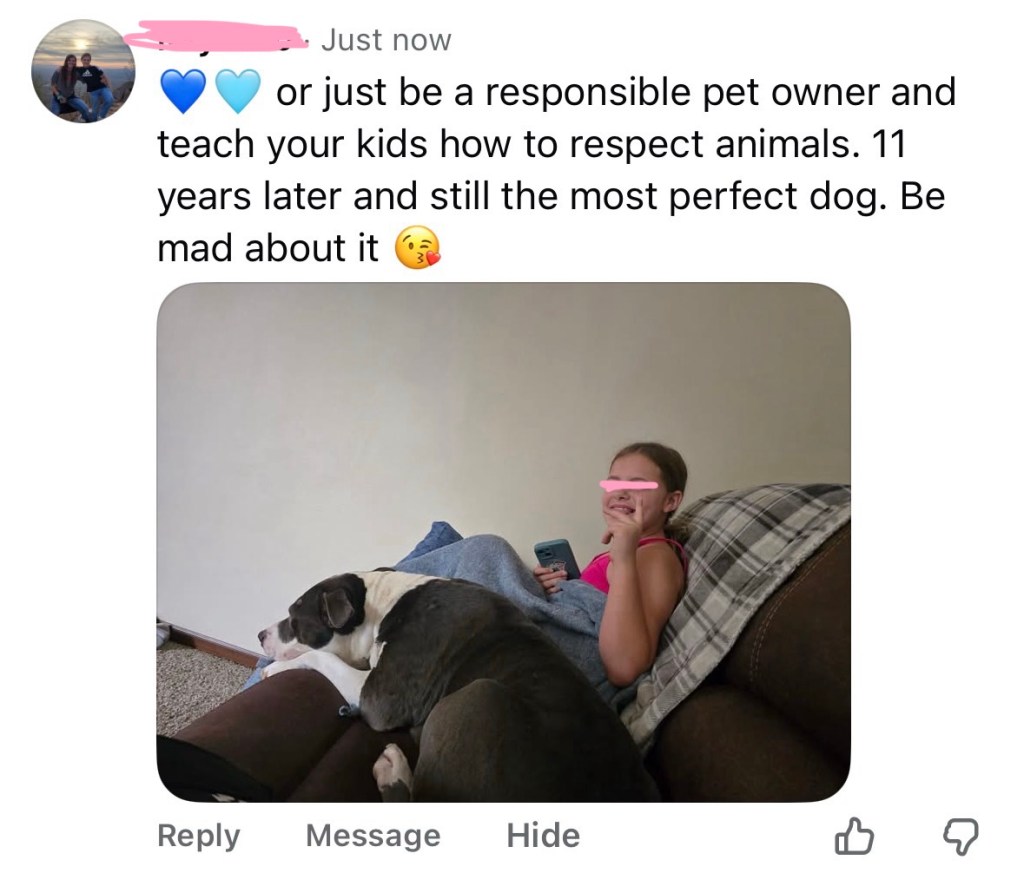
This is one of the reasons you see so many trauma survivors defending the most dangerous dog types with almost religious devotion.
They’re not evaluating the dogs through normal safety standards. They’re evaluating them through the lens of their own life story rooted in extreme abuse and neglect.
If you grow up in chaos, chaos feels familiar.
If you grow up in fear, fear feels manageable.
If you grow up with unpredictable violence, it may not register as something abnormal, even when it comes from a dog.
So when a dog with a history of aggression, bloodsport lineage, or high bite severity potential displays a threat, many traumatized people interpret the signs like this:
• “He’s just scared.”
• “He just needs love.”
• “He’s misunderstood.”
• “People are worse than dogs.”
• “He won’t hurt me, I can control it.”
It isn’t rational risk assessment. It’s trauma bonding disguised as animal advocacy.
𝗪𝗵𝗲𝗿𝗲 𝗧𝗵𝗶𝘀 𝗕𝗲𝗰𝗼𝗺𝗲𝘀 𝗗𝗮𝗻𝗴𝗲𝗿𝗼𝘂𝘀
Trauma survivors often have enormous empathy (that’s the good part.)
But when that empathy is channeled into minimizing risk, defending dangerous behaviors, or ignoring public safety, the results can be fatal.
People repeat the mantra “dogs are safer than humans,” and in their personal story that may feel true. But dog attacks don’t operate on feelings, they operate on breed traits, bite mechanics, selection pressures, and behavior patterns.
And communities must operate on reality, not coping narratives.
𝗪𝗵𝗲𝗿𝗲 𝗗𝗼 𝗪𝗲 𝗚𝗼 𝗙𝗿𝗼𝗺 𝗛𝗲𝗿𝗲?
If we want to reduce severe and fatal dog attacks, we have to understand the belief systems that make people defend the indefensible. That includes compassionately acknowledging that some of these belief systems were born in childhood homes where danger was normalized and trust was shattered.
We can respect trauma survivors while still protecting children, pets, and the public.
Being hurt by humans does not make a high risk dog safe.
We deserve policies rooted in evidence, not in pain.
#dba 🐾📣
#DogBiteAwareness
#PublicSafety
#TraumaAndRisk
#RealityOverFantasy
 Parents for Dog Bite Awareness
Leave a comment