

𝗛𝗢𝗪 𝗧𝗛𝗘 𝗣𝗔𝗦𝗦𝗔𝗚𝗘 𝗠𝗔𝗡𝗜𝗣𝗨𝗟𝗔𝗧𝗘𝗦 𝗣𝗨𝗕𝗟𝗜𝗖 𝗣𝗘𝗥𝗖𝗘𝗣𝗧𝗜𝗢𝗡
𝗧𝗵𝗲 𝗥𝗲𝘀𝗰𝘂𝗲 𝗜𝗻𝗱𝘂𝘀𝘁𝗿𝘆 𝗣𝗹𝗮𝘆𝗯𝗼𝗼𝗸, 𝗗𝗲𝗰𝗼𝗱𝗲𝗱
-JL #dba
𝗧𝗮𝗰𝘁𝗶𝗰 𝟭: 𝗔𝗻𝘁𝗵𝗿𝗼𝗽𝗼𝗺𝗼𝗿𝗽𝗵𝗶𝘇𝗶𝗻𝗴 𝘁𝗵𝗲 𝗱𝗼𝗴 𝘁𝗼 𝗲𝘀𝗰𝗮𝗽𝗲 𝗮𝗰𝗰𝗼𝘂𝗻𝘁𝗮𝗯𝗶𝗹𝗶𝘁𝘆
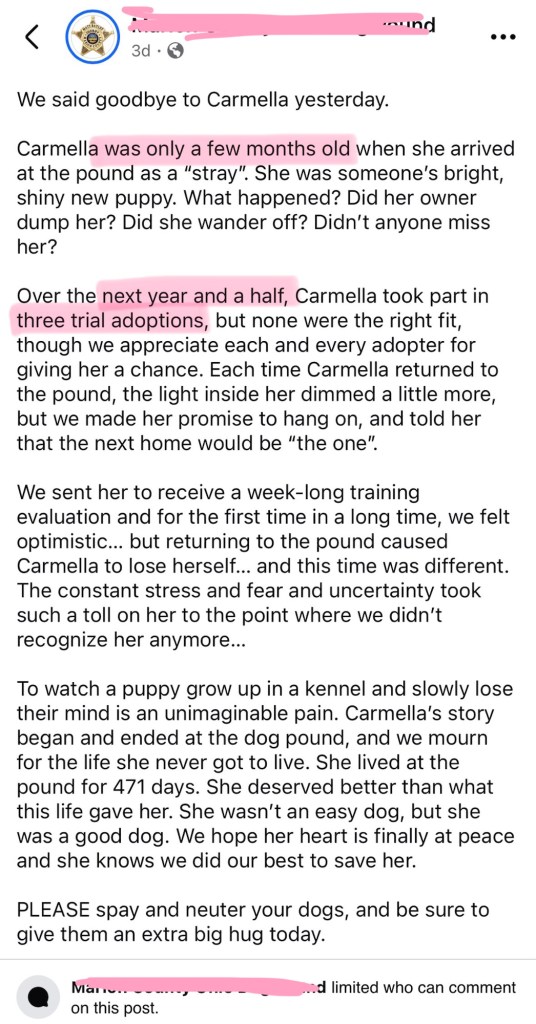
The passage repeatedly gives Carmella human level emotional complexity:
• “the light inside her dimmed”
• “we made her promise”
• “she lost herself”
• “we hope her heart is at peace”
These statements:
• Deflect responsibility from the rescue for keeping a deteriorating dog for 471 days.
• Create a sacrificial narrative, where the shelter is the tragic hero doing everything possible.
• Blur the line between dog behavior and human trauma, hiding true risk factors behind poetic language.
This tactic is persuasive because it reframes a dangerous behavioral decline as a tragic, romanticized emotional journey rather than a predictable outcome of prolonged confinement.
𝗧𝗮𝗰𝘁𝗶𝗰 𝟮: 𝗘𝘅𝗼𝗻𝗲𝗿𝗮𝘁𝗶𝗻𝗴 𝘁𝗵𝗲 𝗶𝗻𝗱𝘂𝘀𝘁𝗿𝘆 𝘄𝗵𝗶𝗹𝗲 𝘀𝗵𝗶𝗳𝘁𝗶𝗻𝗴 𝗯𝗹𝗮𝗺𝗲
The rescue uses implication and rhetorical questioning to suggest that someone else is responsible:
• “Did her owner dump her?”
• “Did she wander off?”
• “Didn’t anyone miss her?”
This creates:
• An imagined villain to draw attention away from the shelter’s own decisions.
• Emotional displacement: readers blame the hypothetical original owner rather than the system that kept an unstable dog alive for nearly 500 days.
The public is redirected from critical questions:
• Why was she cycled through homes she wasn’t safe for?
• Why was a deteriorating dog placed back in the public repeatedly?
• Why was she not euthanized earlier when her suffering and public risk became clear?
𝗧𝗮𝗰𝘁𝗶𝗰 𝟯: 𝗖𝗵𝗲𝗿𝗿𝘆 𝗽𝗶𝗰𝗸𝗶𝗻𝗴 𝗽𝗿𝗼𝗰𝗲𝘀𝘀 𝗱𝗲𝘁𝗮𝗶𝗹𝘀 𝘁𝗼 𝗿𝗲𝘄𝗿𝗶𝘁𝗲 𝗻𝗮𝗿𝗿𝗮𝘁𝗶𝘃𝗲
The rescue frames the repeated failed placements as evidence of her being “not the right fit, instead of the dog being unsafe, unstable, or unsuitable for adoption.
They highlight:
• A training evaluation
to appear responsible and professional.
They omit:
• Whether she failed the evaluation
• What “aggression/biting/kennel craziness” actually entailed
• Whether professional recommendations were ignored
This controlled disclosure manages optics, not transparency.
𝗧𝗮𝗰𝘁𝗶𝗰 𝟰: 𝗘𝗺𝗼𝘁𝗶𝗼𝗻𝗮𝗹 𝗽𝗿𝗶𝗺𝗶𝗻𝗴 𝘁𝗼 𝗮𝗰𝘁𝗶𝘃𝗮𝘁𝗲 𝗱𝗼𝗻𝗼𝗿/𝘃𝗼𝗹𝘂𝗻𝘁𝗲𝗲𝗿 𝗯𝗲𝗵𝗮𝘃𝗶𝗼𝗿
After building the tragic arc to an emotional peak, they immediately pivot to:
• “come out and volunteer”
• “foster or adopt”
• “the dogs need you”
This is classic nonprofit fundraising psychology:
1. Induce emotional distress
2. Offer a concrete action that resolves that distress
3. Convert grief into labor, fostering, or donations
This is not accidental. It’s a well studied technique called affective arousal → prosocial compliance.
𝗧𝗮𝗰𝘁𝗶𝗰 5: 𝗦𝗛𝗨𝗧𝗧𝗜𝗡𝗚 𝗗𝗢𝗪𝗡 𝗖𝗥𝗜𝗧𝗜𝗖𝗜𝗦𝗠 𝗯𝘆 𝗱𝗶𝘀𝗮𝗯𝗹𝗶𝗻𝗴 𝗰𝗼𝗺𝗺𝗲𝗻𝘁𝘀
“Commenting has been disabled.”
This ensures:
• No accountability
• No questions about risk
• No conversation about public safety
The post narrates emotionally but prevents public input, a tactic used to:
• Shape the narrative
• Avoid criticism
• Suppress questioning about shelter decisions
This is a form of impression management.
𝗧𝗮𝗰𝘁𝗶𝗰 6: 𝗦𝗵𝗶𝗳𝘁𝗶𝗻𝗴 𝘁𝗵𝗲 𝗹𝗮𝗻𝗴𝘂𝗮𝗴𝗲 𝗼𝗳 𝗮𝗴𝗴𝗿𝗲𝘀𝘀𝗶𝗼𝗻
The dog is described as:
• “not an easy dog”
• “kennel craziness”
• “losing herself”
These euphemisms replace:
• aggression
• dangerous behavior
• repeated failed placements
• bite risk
• deterioration severe enough to end in euthanasia
This protects:
• The shelter’s reputation
• The narrative that “all dogs are adoptable”
• The belief that “there are no bad dogs, only bad owners”
It also shields the public from acknowledging that some dogs are not safe.
𝗧𝗮𝗰𝘁𝗶𝗰 7: 𝗨𝘀𝗶𝗻𝗴 𝗽𝗮𝗶𝗻 𝘁𝗼 𝗲𝗹𝗲𝘃𝗮𝘁𝗲 𝘁𝗵𝗲 𝗼𝗿𝗴𝗮𝗻𝗶𝘇𝗮𝘁𝗶𝗼𝗻’𝘀 𝗶𝗺𝗮𝗴𝗲
Framing the shelter as:
• compassionate
• devastated
• fighting for a broken dog
creates organizational martyrdom.
This makes the shelter appear:
• heroic
• selfless
• morally superior
Even though:
• They kept a deteriorating, unstable dog alive for 471 days
• They subjected her to repeated failed adoptions
• They prolonged her suffering
It reframes a systemic failure as a noble struggle.
𝗕𝗼𝘁𝘁𝗼𝗺 𝗟𝗶𝗻𝗲: 𝗧𝗵𝗶𝘀 𝗶𝘀 𝗮 𝗽𝗼𝗹𝗶𝘀𝗵𝗲𝗱 𝗽𝗶𝗲𝗰𝗲 𝗼𝗳 𝗲𝗺𝗼𝘁𝗶𝗼𝗻𝗮𝗹 𝗡𝗼𝗻𝗽𝗿𝗼𝗳𝗶𝘁 𝗠𝗮𝗿𝗸𝗲𝘁𝗶𝗻𝗴
It uses:
• Storytelling psychology
• Emotional priming
• Narrative manipulation
• Strategic omission
• Anthropomorphism
• Donor conversion tactics
• Comment-blocking
• blame displacement
• euphemistic language
• trauma bonding
to control the narrative and shield the rescue from criticism.
Remember, “it’s all how they’re raised” and “there are no bad breeds, only bad owners.” This rescue spent almost 500 days and a chunk of tax payer money raising and training Carmella from puppyhood.
#dogbiteawareness


 Parents for Dog Bite Awareness
Leave a comment