𝗧𝗵𝗲 𝗕𝗿𝗲𝗮𝗸𝗱𝗼𝘄𝗻 𝗼𝗳 “𝗖𝗼𝗯𝘆’𝘀 𝗙𝗶𝗻𝗮𝗹 𝗣𝗹𝗲𝗮”
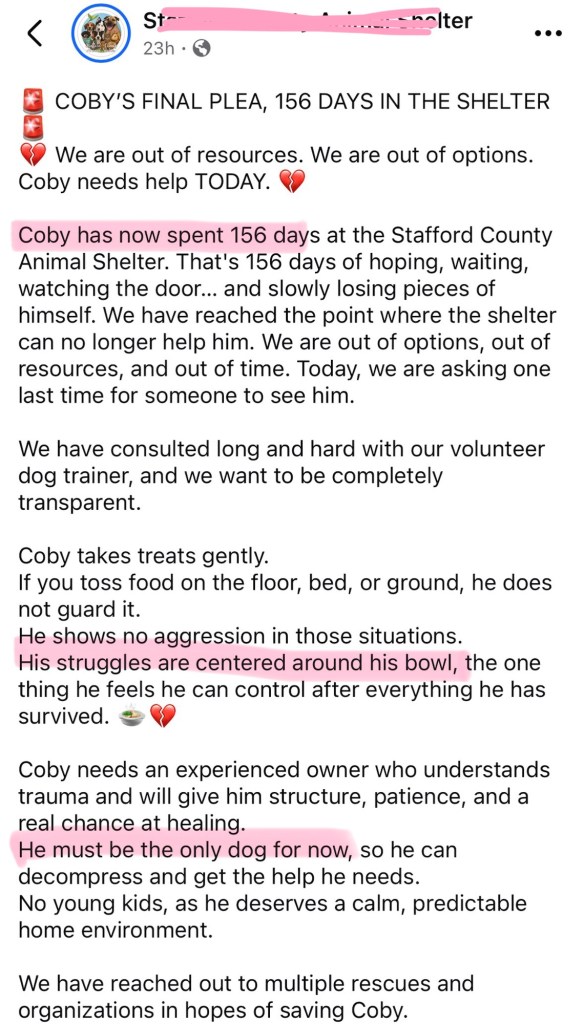
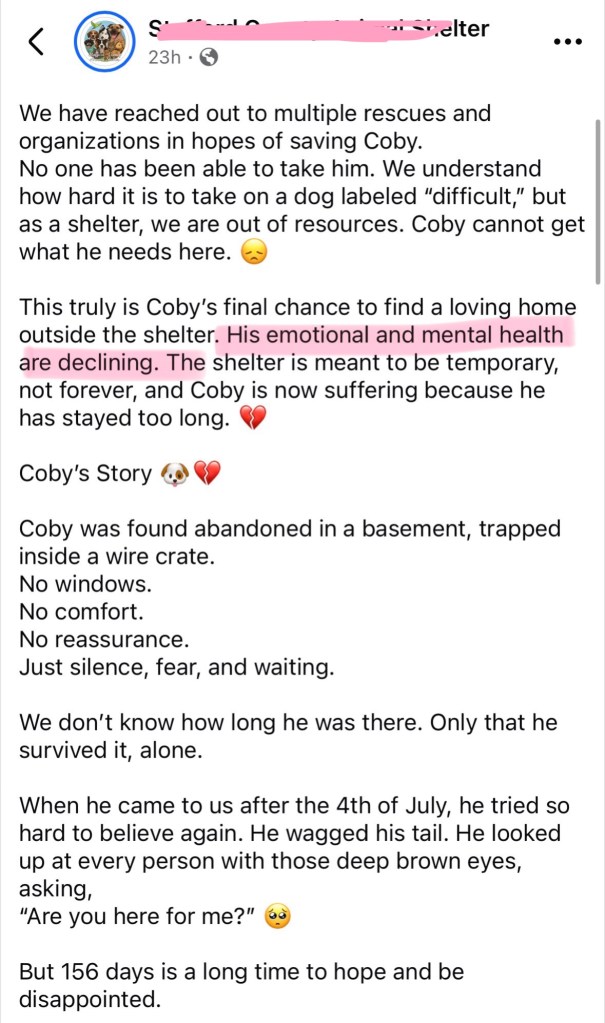
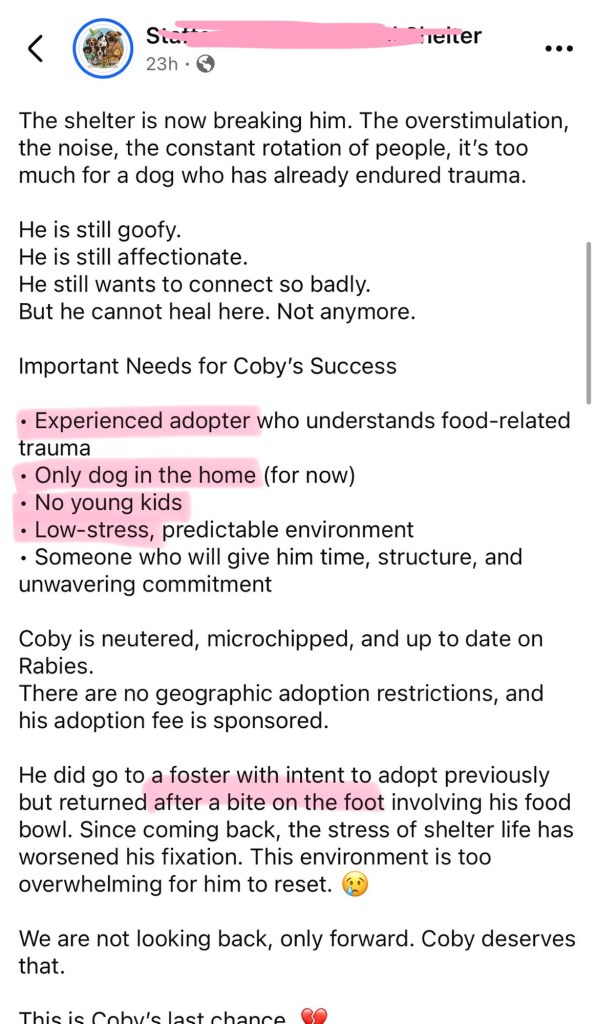
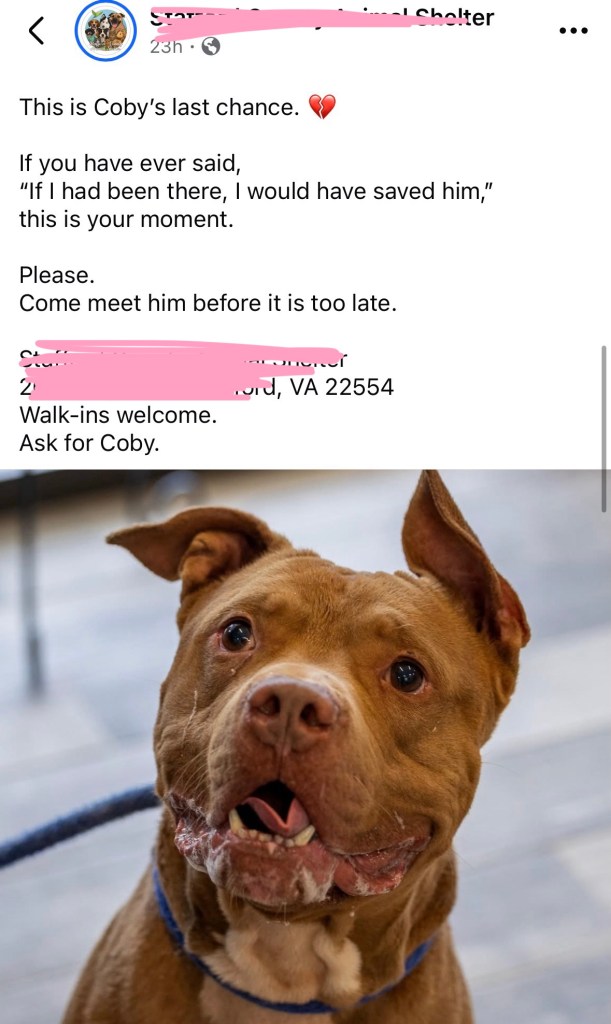
The rescue industry has developed its own language and it’s one that blends emotional desperation, selective transparency, and polished storytelling.
To the untrained eye, posts like “𝗖𝗼𝗯𝘆’𝘀 𝗙𝗶𝗻𝗮𝗹 𝗣𝗹𝗲𝗮” look compassionate. But beneath the surface lies a pattern of manipulation, incomplete information, and ethically concerning framing.
Let’s walk through this piece line by line to help everyday readers recognize what they’re really being told and what’s being intentionally left unsaid.
-JL #DBA
𝗛𝗘𝗔𝗗𝗟𝗜𝗡𝗘 𝗠𝗔𝗡𝗜𝗣𝗨𝗟𝗔𝗧𝗜𝗢𝗡: 𝗔𝗿𝘁𝗶𝗳𝗶𝗰𝗶𝗮𝗹 𝗘𝗺𝗲𝗿𝗴𝗲𝗻𝗰𝘆, 𝗦𝗰𝗮𝗿𝗰𝗶𝘁𝘆, 𝗮𝗻𝗱 𝗕𝗹𝗮𝗺𝗲 ⏰
“𝗙𝗶𝗻𝗮𝗹 𝗣𝗹𝗲𝗮”
“𝗢𝘂𝘁 𝗼𝗳 𝘁𝗶𝗺𝗲”
“𝗧𝗼𝗱𝗮𝘆”
These phrases are engineered to short circuit the reader’s critical thinking. This is the “𝗘𝗺𝗲𝗿𝗴𝗲𝗻𝗰𝘆 𝗙𝗿𝗮𝗺𝗲” which is a classic pressure tactic used in sales, political campaigns, and other high demand groups. It creates panic, not clarity.
The readers feel an intense need to help RIGHT NOW, which obscures the part where the shelter spent 156 days allowing Coby to deteriorate. Instead of realizing that this was a 156 process of failure, the post turns 𝗵𝗶𝘀 decline into 𝘆𝗼𝘂𝗿 emergency. This shifts responsibility away from the system that kept him despite signs of worsening aggression.
𝗣𝗔𝗥𝗧𝗜𝗔𝗟 𝗧𝗥𝗨𝗧𝗛: “𝗛𝗲’𝘀 𝗴𝗲𝗻𝘁𝗹𝗲… 𝗲𝘅𝗰𝗲𝗽𝘁 𝘄𝗵𝗲𝗻 𝗵𝗲’𝘀 𝗻𝗼𝘁.” 🤔
The post claims Coby:
✔ takes treats gently
✔ doesn’t guard scattered food
✖ but does guard his bowl to the point of biting his adopter
A bite over a food bowl is not mild trauma or nerves: it is a serious red flag 🚩 for unpredictable aggression and one of the most common precursors to:
• escalating guarding
• resource based attacks
• multi bite incidents in homes
The narrative strategically minimizes what happened:
“A bite on the foot involving his food bowl.”
This avoids saying:
He bit a human being during a feeding scenario in a home environment.
It was serious enough that the adopter returned him. That should be front and center when informed consent is a standard.
𝗧𝗛𝗘 𝗧𝗥𝗔𝗨𝗠𝗔 𝗡𝗔𝗥𝗥𝗔𝗧𝗜𝗩𝗘: 𝗔 𝗣𝗼𝘄𝗲𝗿𝗳𝘂𝗹 𝗕𝘂𝘁 𝗦𝗵𝗼𝗿𝘁 𝗦𝗶𝗴𝗵𝘁𝗲𝗱 𝗧𝗼𝗼𝗹 🧠
Rescues frequently use “trauma language” to reframe aggression as:
• understandable
• sympathetic
• excusable
• inevitable
• fixable by love
Words such as “𝗻𝗲𝗿𝘃𝗼𝘂𝘀” “𝘀𝗲𝗻𝘀𝗶𝘁𝗶𝘃𝗲 “𝘂𝗻𝘀𝘂𝗿𝗲” and “𝗵𝗼𝗽𝗲𝗳𝘂𝗹” replace more accurate terms.
The trauma story creates an external villain so the dog is never responsible for its actions. This is psychologically comforting, but not true to behavioral science.
𝗟𝗢𝗚𝗜𝗖𝗔𝗟 𝗙𝗔𝗟𝗟𝗔𝗖𝗜𝗘𝗦 𝗨𝗦𝗘𝗗 𝗧𝗛𝗥𝗢𝗨𝗚𝗛𝗢𝗨𝗧
1. Appeal to Emotion 🫵
Creates guilt rather than informed decision making.
2. Halo Fallacy 😇
“He’s affectionate, goofy, loving.”
Aggression and affection are not mutually exclusive. Many dangerous dogs are extremely affectionate toward familiar humans. Even bears and lions can cuddle.
3. Victim to Hero Inversion (DARVO) 👹
Coby is framed as the one being failed, reversing responsibility for his actions.
4. Scarcity Fallacy ‼️
“This is your last chance.”
Highly manipulative; often false.
5. Survivor Narrative 🤕
Portrays the dog as noble and persevering, making people feel morally obligated to “complete his story arc.”
𝗧𝗛𝗘 𝗕𝗢𝗪𝗟 𝗢𝗕𝗦𝗘𝗦𝗦𝗜𝗢𝗡: 𝗡𝗢𝗧 𝗔 𝗤𝗨𝗜𝗥𝗞, 𝗕𝗨𝗧 𝗔 𝗥𝗘𝗗 𝗙𝗟𝗔𝗚
The post says his bowl is the “one thing he can control.” But here’s what that actually means from a behavioral standpoint:
• heightened arousal
• chronic stress
• low impulse control
• potential for multi bite escalation
• territorial/resource based unpredictability
These are not conditions a typical family can, or should, manage.
This issue already caused a bite on an adopter, and the narrative minimizes that reality.
𝗧𝗛𝗘 𝗖𝗢𝗠𝗠𝗜𝗧𝗠𝗘𝗡𝗧 TRAP
The description of needed adopters is a red flag:
• “Experienced”
• “Understands trauma”
• “Low stress home”
• “Predictable environment”
• “Unwavering commitment”
This is not a pet profile.
These are the requirements for owning a lethal or exotic animal, not a household companion. The post quietly redefines “adoption” into “private ownership of a high liability case.”
𝗧𝗛𝗘 𝗚𝗨𝗜𝗟𝗧 𝗧𝗛𝗥𝗘𝗔𝗧 🪡
“If you ever said you’d help… this is your moment.”
This is textbook coercive emotional pressure. It turns the reader into the villain if they make a rational choice.
In psychology, this is called emotional blackmail:
“If you don’t do what we want, you should feel responsible for the outcome.”
This is profoundly unethical in a volunteer/goodwill based industry.
𝗧𝗛𝗘 𝗦𝗬𝗦𝗧𝗘𝗠𝗜𝗖 𝗣𝗥𝗢𝗕𝗟𝗘𝗠 🙉
Coby is not the villain.
But neither is the public.
The villain is the system that:
• keeps dogs too dangerous to adopt
• minimizes or omits bite histories
• uses emotional manipulation
• transfers liability into homes
• relies on public guilt instead of behavioral honesty
• normalizes suffering by calling it “hope”
This is how preventable tragedies occur. This is how children get bitten.
This is how families’ lives are ruined.
Coby is not a “victim of stigma.”
He is a dog with:
• a confirmed bite history
• worsening resource aggression
• deteriorating mental health
• chronic stress behaviors
• escalating risk inside and outside a home
That does not make him evil.
But it does make him unsafe.
It is not compassionate to place a dangerous dog into a family home.
It is not humane to keep a dog suffering in a shelter for 156 days.
It is not ethical to hide behavioral red flags behind emotional storytelling.
Compassion also includes honesty, safety, and responsibility.
𝗪𝗛𝗬 𝗧𝗛𝗜𝗦 𝗠𝗔𝗧𝗧𝗘𝗥𝗦 𝗙𝗢𝗥 𝗣𝗔𝗥𝗘𝗡𝗧𝗦 𝗔𝗡𝗗 𝗧𝗛𝗘 𝗣𝗨𝗕𝗟𝗜𝗖
Recognizing these red flags is not about judgment. It’s about protecting families, children, and pets, and about demanding an ethical, transparent rescue system.
Emotional stories do not erase risk.
The public deserves honesty.
And dogs deserve humane, realistic outcomes, not endless suffering dressed up as “one more chance.” 💔
 Parents for Dog Bite Awareness
Leave a comment