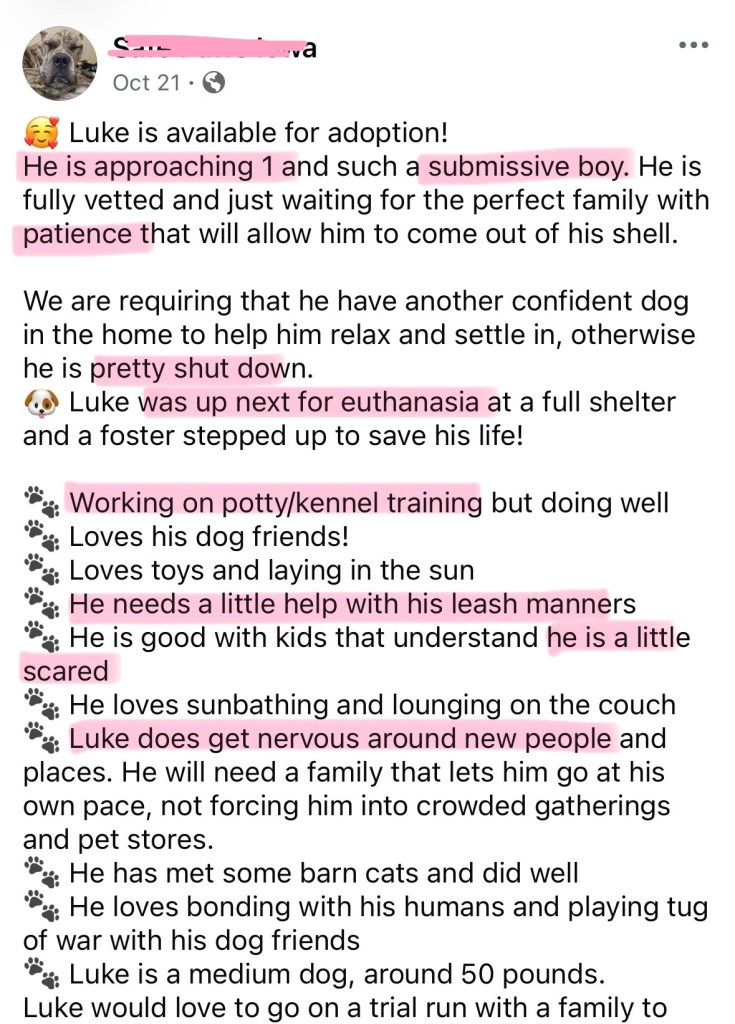
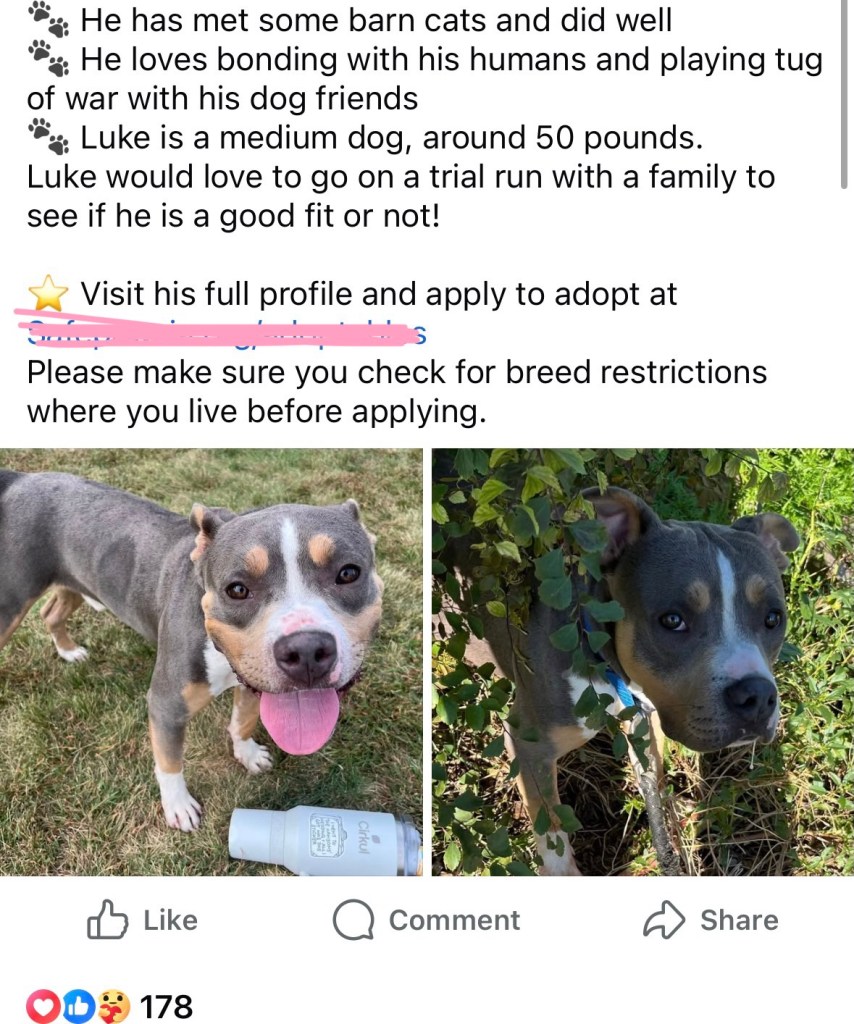
Let’s take a look at the psychology and marketing behind this advertisement for #Luke.
-JL #dba
𝗧𝗮𝗰𝘁𝗶𝗰 𝟭: Reframing Severe Shutdown as “Submissive” and “Shy”
“such a submissive boy”
“come out of his shell”
“pretty shut down”
These phrases replace the accurate behavioral terminology:
• fear-based avoidance
• shutdown/learned helplessness
• flight risk
• unstable/environmental reactivity
Calling these behaviors “submissive” is a classic rescue industry euphemism.
It signals to insiders he is fearful and potentially unpredictable, while outsiders interpret it as “sweet and harmless.”
𝗧𝗮𝗰𝘁𝗶𝗰 𝟮: Required “Confident Dog” = Behavioral Crutch
“We are requiring that he have another confident dog in the home…”
This is a major liability flag.
Dogs that:
• cannot function independently
• require another dog to model behavior
• panic without a canine anchor
…often have severe anxiety and poor resilience, and can develop:
• panic aggression
• resource guarding
• dependency behaviors
• leash reactivity when separated from the anchor dog
The rescue softens this by saying:
“to help him relax and settle”
This reframes a clinical behavioral instability as a “cute quirk.”
𝗧𝗮𝗰𝘁𝗶𝗰 𝟯: Trauma Bond Priming (“He was next for euthanasia”)
“Luke was up next for euthanasia… and a foster stepped up to save his life!”
This is used to:
• induce guilt
• suppress critical thinking
• override adopter hesitance
• create pressure to “complete the rescue arc”
It also strategically obscures the reason the shelter considered euthanasia, which was likely high risk behavior. They fail to explain why he was next on the list.
𝗧𝗮𝗰𝘁𝗶𝗰 𝟰: Positive Bullet Points to Distract
A string of cute traits:
• loves toys
• loves dog friends
• likes sunbathing
• lounges on the couch
This is a known marketing technique:
bury risk indicators by surrounding them with low stakes, harmless traits.
It creates a sense of “balance” that masks the severity of the negatives.
𝗧𝗮𝗰𝘁𝗶𝗰 𝟱: Downplaying Behavioral Red Flags
Notice the soft language:
• “needs help with leash manners”
→ likely pulls, freezes, panics, or reacts
• “nervous around new people and places”
→ probable fear reactivity, flight attempts, or defensive behavior
• “family that lets him go at his own pace”
→ cannot handle normal household activity
• “kids that understand he is a little scared”
→ child risk is reframed as “kids need to be gentle”
The issue isn’t “kids who understand.”
It’s that fearful 50lb bloodsport dogs are unpredictable around children.
But the responsibility is shifted onto the family and specifically children.
𝗧𝗮𝗰𝘁𝗶𝗰 𝟲: “Trial Run” Pitch to Lower Defenses
“Luke would love to go on a trial run…”
This is an increasingly common tactic used by rescues to:
• get the dog into a home by lowering psychological barriers
• encourage people who are unsure to “just try it”
• create emotional investment in the dog (the sunk cost effect)
Once the dog is in the home:
• families feel guilt returning him
• kids bond
• pressure builds to “make it work”
This is behavioral anchoring: get the dog in the door first, then rely on guilt and attachment.
𝗧𝗮𝗰𝘁𝗶𝗰 𝟳: Silence Around Risk Factors
What’s missing:
• bite history
• fear aggression
• noise sensitivity
• flight risk
• panic behaviors
• triggers
• impact on children
• reaction to restraint
• reaction to strangers
• resource guarding
• handling tolerance (grooming, vet, others in the home)
This converts manageable disclosure into marketing messaging.
𝗧𝗮𝗰𝘁𝗶𝗰 𝟴: The “Breed Restrictions” Disclaimer
“Please check for breed restrictions where you live…”
This reveals the dog is a pit type dog, though the post never states it.
Why hide the breed?
• Breed identity reduces adoption rates
• Some adopters will not consider pit breeds
• Funding, optics, and PR are at stake
Mentioning restrictions without naming the breed is a form of strategic ambiguity:
• Insiders know exactly what it means
• Outsiders gloss over it
This is common in shelters where pit labeling is avoided for adoption numbers.
𝗧𝗮𝗰𝘁𝗶𝗰 𝟵: Selling Fear Based Shutdown as a “Bonding Dog”
“He loves bonding with his humans”
A dog bonded through fear dependency is not showing a healthy attachment. Shutdown dogs appear clingy because the world terrifies them.
This creates:
• separation anxiety
• flight risk
• hyperattachment
• panic when routines change
The rescue reframes pathological dependency as “love.”
This post is engineered to sell a behaviorally vulnerable dog to an inexperienced adopter without disclosing risk while evoking guilt, pity, and savior instincts. This is rescue marketing, not transparent adoption.
#dogbiteawareness #rescuedog #rescueismyfavoritebreed
Many thanks to Audrey for submitting this ad.
 Parents for Dog Bite Awareness
Leave a comment