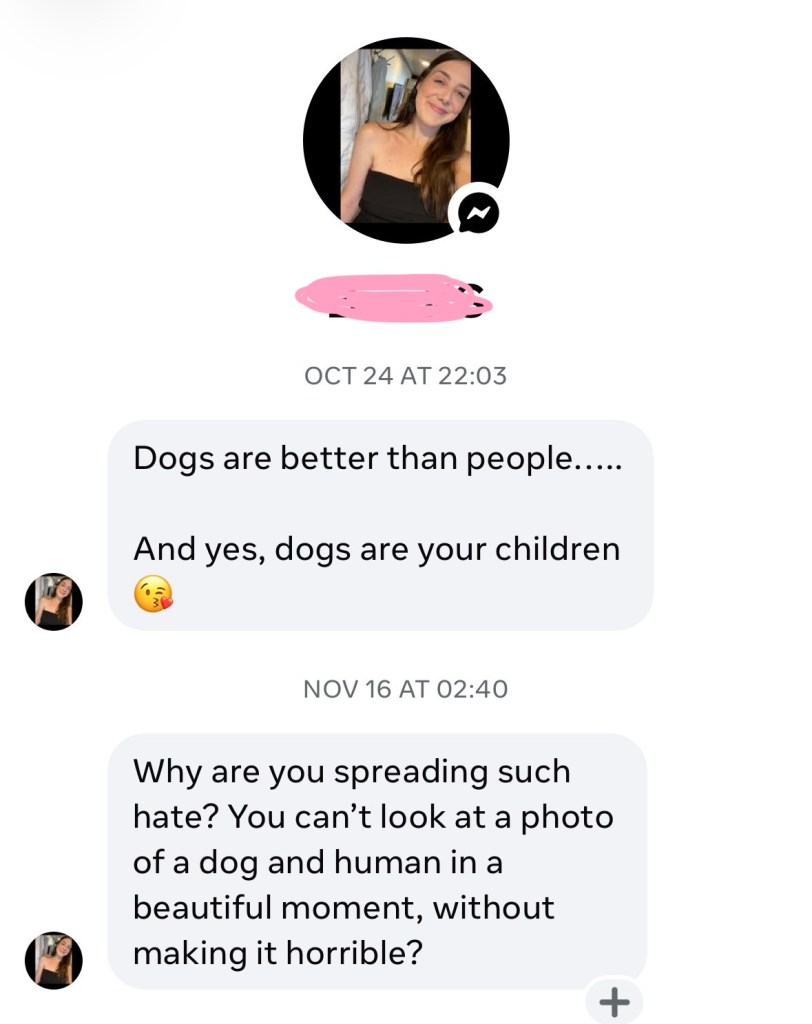
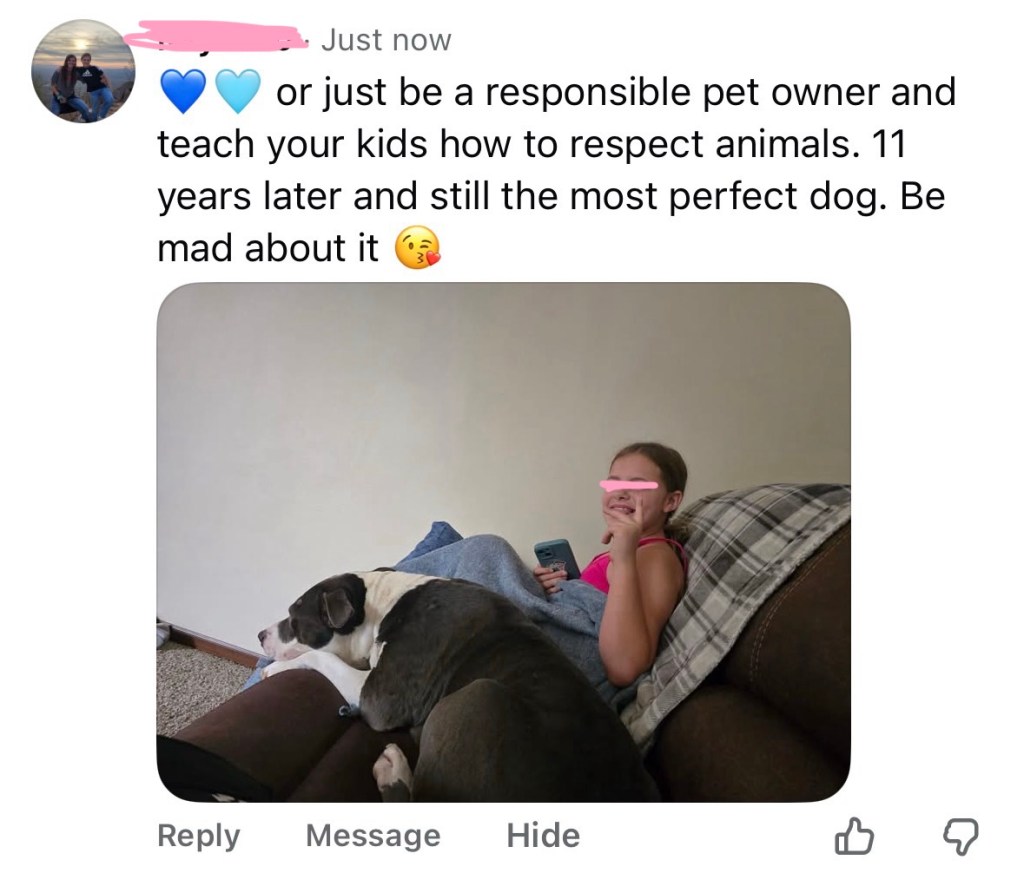
Bec’s reaction, interpreting a neutral, fact based explanation of canine risk signals as “hate” is not unusual within subcultures that idealize dogs.
Her language (“dogs are better than people,” “dogs are your children,” “a beautiful moment”) reflects a psychological framework that makes objective discussion of danger feel like a personal attack. Understanding this pattern helps clarify why even gentle educational messaging can trigger hostility. Let’s unpack some of the cognitive defense mechanisms behind her reaction.
-JL #DBA
𝗣𝘀𝘆𝗰𝗵𝗼𝗹𝗼𝗴𝗶𝗰𝗮𝗹 𝗠𝗲𝗰𝗵𝗮𝗻𝗶𝘀𝗺 𝟭: 𝗛𝘂𝗺𝗮𝗻 𝗔𝗻𝗶𝗺𝗮𝗹 𝗜𝗱𝗲𝗻𝘁𝗶𝘁𝘆 𝗠𝗲𝗿𝗴𝗲
Statements like:
“Dogs are better than people”
“Dogs are your children”
…indicate identity fusion, a phenomenon where the individual merges their sense of self with a specific group or entity. In this case, the dog is not simply a companion animal, it becomes an extension of the self, the family, and the person’s moral identity.
When identity is fused with the animal, any cautionary statement about dogs is experienced as:
• a criticism of them
• an attack on their values
• a threat to their worldview
Thus, even if you share a neutral, risk focused post it becomes reinterpreted as hostility.
𝗣𝘀𝘆𝗰𝗵𝗼𝗹𝗼𝗴𝗶𝗰𝗮𝗹 𝗠𝗲𝗰𝗵𝗮𝗻𝗶𝘀𝗺 𝟮: Narcissistic Extension of the Dog
Calling the image a “beautiful moment” signals moral elevation, a process in which the individual idealizes the interaction as inherently pure, tender, and beyond critique.
When a subject becomes sacralized, it enters a psychologically protected category. Criticism, however factual or safety based, is viewed as a form of moral contamination. This is also extremely common with narcissism. As the narcissist views herself (and her dog) as superior to all other beings, any criticism triggers extreme hostility.
This is why Bec frames safety analysis as “making it horrible.”
To her, risk is not merely risk; it desecrates something she views as sacred.
𝗣𝘀𝘆𝗰𝗵𝗼𝗹𝗼𝗴𝗶𝗰𝗮𝗹 𝗠𝗲𝗰𝗵𝗮𝗻𝗶𝘀𝗺 𝟯: 𝗖𝗼𝗴𝗻𝗶𝘁𝗶𝘃𝗲 𝗗𝗶𝘀𝘀𝗼𝗻𝗮𝗻𝗰𝗲 𝗮𝗻𝗱 𝗧𝗵𝗲 𝗦𝗮𝗳𝗲𝘁𝘆 𝗣𝗮𝗿𝗮𝗱𝗼𝘅
When individuals (1) deeply anthropomorphize dogs while (2) engaging in risky behaviors with children, they often experience cognitive dissonance when confronted with objective danger.
The mind resolves this discomfort not by updating beliefs, but by reframing the information as an attack, which allows them to:
• preserve the belief that their dog is harmless
• maintain the narrative that their parenting is safe
• avoid the anxiety of recognizing potential harm to the child
Thus, the brain chooses ego preservation over risk recognition.
𝗣𝘀𝘆𝗰𝗵𝗼𝗹𝗼𝗴𝗶𝗰𝗮𝗹 𝗠𝗲𝗰𝗵𝗮𝗻𝗶𝘀𝗺 𝟰: 𝗧𝗵𝗲 𝗘𝗺𝗽𝗮𝘁𝗵𝘆 𝗠𝗶𝘀𝗮𝗹𝗶𝗴𝗻𝗺𝗲𝗻𝘁 𝗣𝗮𝘁𝘁𝗲𝗿𝗻
Many dog centered subcultures exhibit empathetic misalignment, where emotional concern is disproportionately focused on animals while the vulnerability of victims is minimized or dismissed.
Thus, a post designed to educate about children’s safety is reframed as:
• hatred toward dogs
• an attack on the owner
• a disruption of a sentimental narrative
The focus shifts away from the child because the empathy has been rerouted toward the animal.
𝗣𝘀𝘆𝗰𝗵𝗼𝗹𝗼𝗴𝗶𝗰𝗮𝗹 𝗠𝗲𝗰𝗵𝗮𝗻𝗶𝘀𝗺 𝟱: 𝗘𝗺𝗼𝘁𝗶𝗼𝗻 𝗼𝘃𝗲𝗿 𝗔𝗻𝗮𝗹𝘆𝘁𝗶𝗰𝗮𝗹 𝗟𝗼𝗴𝗶𝗰
Bec’s reply is structured around emotional assertions and not factual claims.
This is a hallmark of affect dominant cognition, in which:
• feelings are treated as facts
• emotional discomfort is interpreted as external wrongdoing
• safety information becomes “hate” simply because it creates negative sensations
To such individuals, the emotional tone of the image matters more than the objective risk indicators.
𝗣𝘀𝘆𝗰𝗵𝗼𝗹𝗼𝗴𝗶𝗰𝗮𝗹 𝗠𝗲𝗰𝗵𝗮𝗻𝗶𝘀𝗺 𝟲: 𝗣𝗮𝗿𝗮𝘀𝗼𝗰𝗶𝗮𝗹 𝗔𝘁𝘁𝗮𝗰𝗵𝗺𝗲𝗻𝘁 𝘁𝗼 “𝗘𝗻𝗷𝗼𝘆𝗮𝗯𝗹𝗲 𝗖𝗼𝗻𝘁𝗲𝗻𝘁”
Many social media users develop parasocial relationships not only with influencers but also with feel good dog content.
When you contextualize a feel good image with factual risk analysis, you disrupt a predictable emotion reward circuit in addictive behavior. The user interprets this disruption as malicious intent instead of neutral education. You get a similar reaction as when you use n&rcan on someone.
𝗧𝗵𝗲 𝗕𝗼𝗹𝗱𝗲𝗿 𝗣𝗼𝗶𝗻𝘁: 𝗔𝗻𝘆 𝗮𝘁𝘁𝗲𝗺𝗽𝘁 𝘁𝗼 𝗶𝗻𝘁𝗿𝗼𝗱𝘂𝗰𝗲 𝗿𝗶𝘀𝗸 𝗶𝗻𝘁𝗼 𝗮 𝘀𝗮𝗰𝗿𝗮𝗹𝗶𝘇𝗲𝗱 𝗻𝗮𝗿𝗿𝗮𝘁𝗶𝘃𝗲 𝘄𝗶𝗹𝗹 𝗯𝗲 𝗿𝗲𝗰𝗼𝗱𝗲𝗱 𝗮𝘀 𝗮 𝗽𝗲𝗿𝘀𝗼𝗻𝗮𝗹 𝗮𝘁𝘁𝗮𝗰𝗸.
Bec’s response was not about analyzing the risk in the photo showing an unsafe dog and child interaction.
It was about:
• the threat to her worldview
• the threat to her emotional relationship with dogs
• the threat to the sentimental interpretation she projected onto the image
To someone operating within this cognitive architecture, any risk based commentary becomes “hate,” even when it is neutral, factual, and child centric.
 Parents for Dog Bite Awareness
Leave a comment