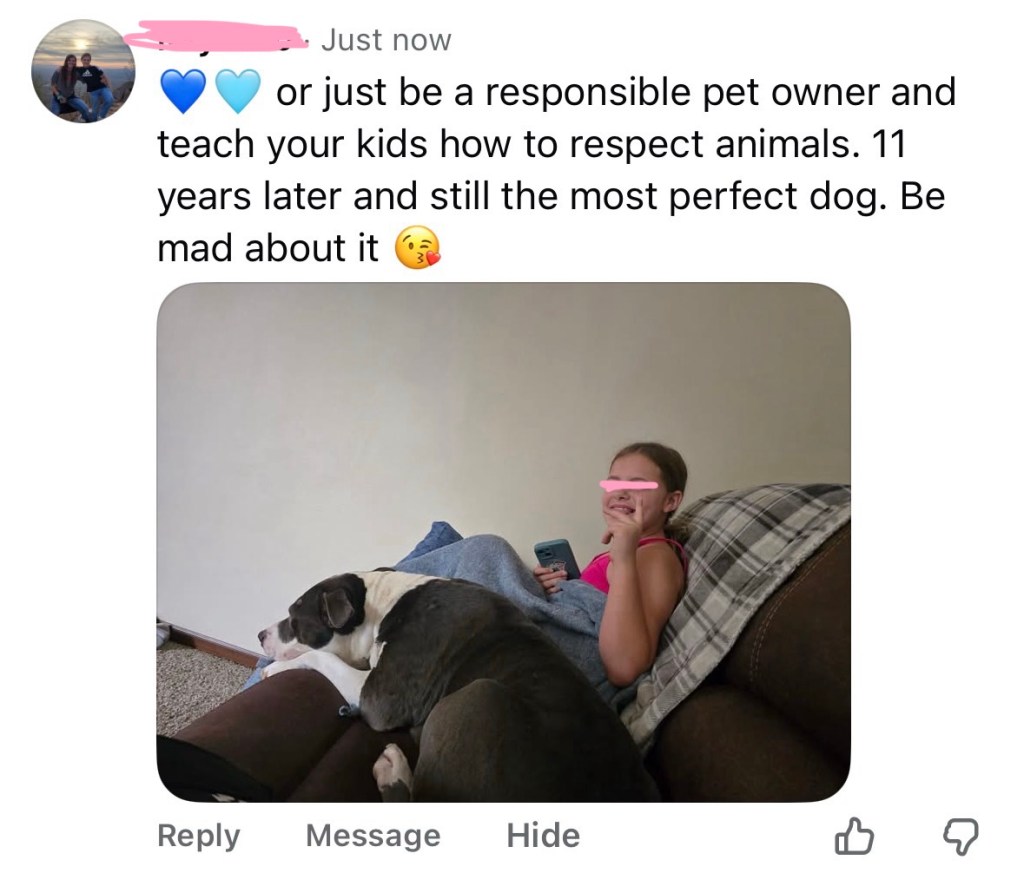
When someone shares a photo of their pitbull pressed against a child and write says:
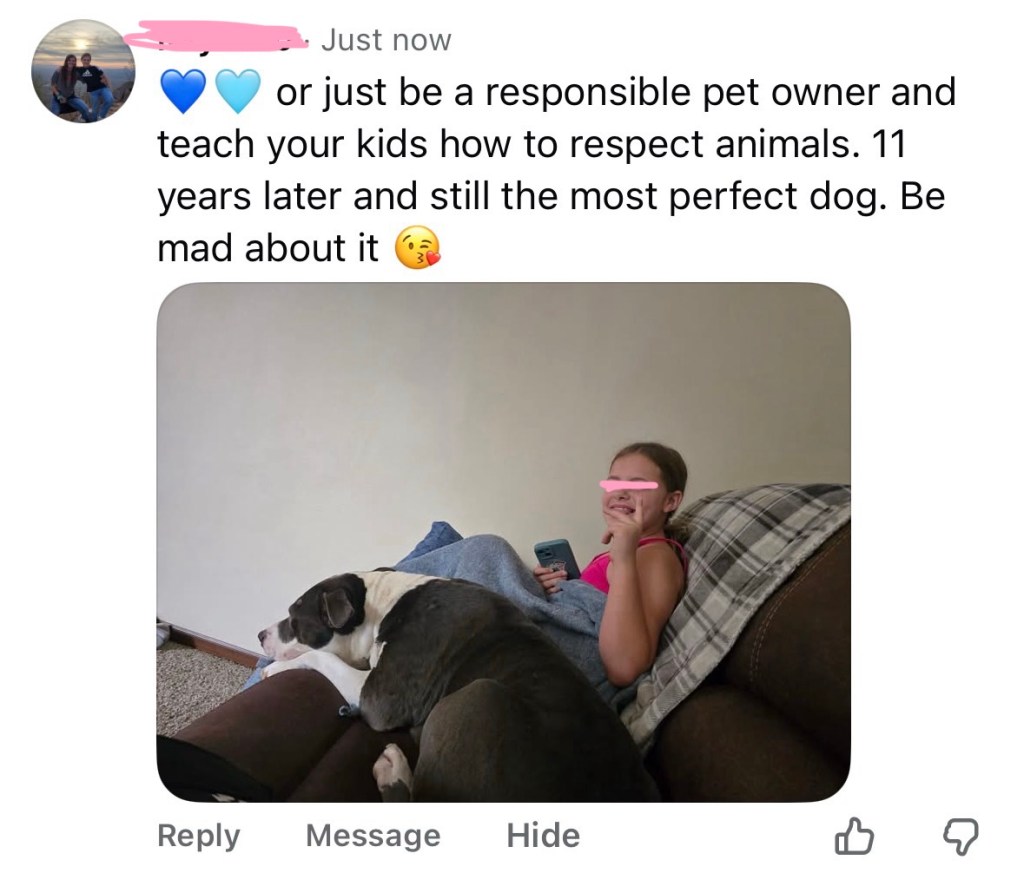
“💙🩵 or just be a responsible pet owner and teach your kids how to respect animals. 11 years later and still the most perfect dog. Be mad about it 😘”
…it reveals several concerning cognitive errors and emotional immaturity patterns worth discussing.
-JL #DBA

1. Survivorship Bias
“Nothing bad has happened yet, therefore nothing bad can happen.”
This ignores risk statistics, breed specific behaviors, and countless families whose “perfect dog” seriously injured someone after years without incident.
2. False Equivalence
She frames the issue as “teach your kids to respect animals,” as if developing child behavior is on par with managing a large, powerful breed with lethal risk. These are not equivalent responsibilities.
3. Personal Anecdote > Data
The belief that “my experience is the universal truth” is a hallmark cognitive error.
4.Defensive Reversal (“Be mad about it 😘”)
The flirtatious/taunting ending is an immature defense. Instead of engaging with safety concerns, she mocks anyone who raises them. This signals insecurity, not confidence.
2. Identity Fusion With the Dog
Calling the dog “perfect” and framing criticism of safety as a personal attack suggests she’s fused her selfworth to her pet. When identity is attached to an animal, safety warnings feel like threats that lead to denial instead of humble reflection.
3. Externalization of Responsibility
Instead of acknowledging the adult’s duty to create a healthy environment, the burden is shifted to a child:
𝗍𝗁𝗲 𝗄𝗂𝖽 must “respect the dog,” instead of the adult managing the known risk of allowing unsafe proximity. This role reversal is common in abusive homes and is often connected to a specific form of abuse called parentification. Children are required to take on adult responsibilities and even care for the parent emotionally, physically, or financially.
4. Magical Thinking
The idea that love, longevity, or “good vibes” override instinctual behavior is classic magical thinking. Emotional belief replaced practical risk management.
𝗪𝗵𝘆 𝗧𝗵𝗶𝘀 𝗠𝗮𝘁𝘁𝗲𝗿𝘀
Most severe dog attacks involve:
• a well loved family dog
• no prior incidents
• a familiar child
• a moment of unmanaged proximity
Denial doesn’t prevent tragedy. It allows it to persist. Not only for the children, but the dogs they claim to love.
#dogbiteawareness #protectkids #safehome #cyclesofabuse

 Parents for Dog Bite Awareness
Leave a comment